Saturday, March 14, 2026

Europe’s Artificial Intelligence Act is the world’s first comprehensive attempt to govern AI. This series explores how the regulation reshapes decision-making across finance, education, labour markets and government—revealing how algorithms are becoming a central question of power, accountability and democratic oversight.
Read More
Wednesday, February 25, 2026
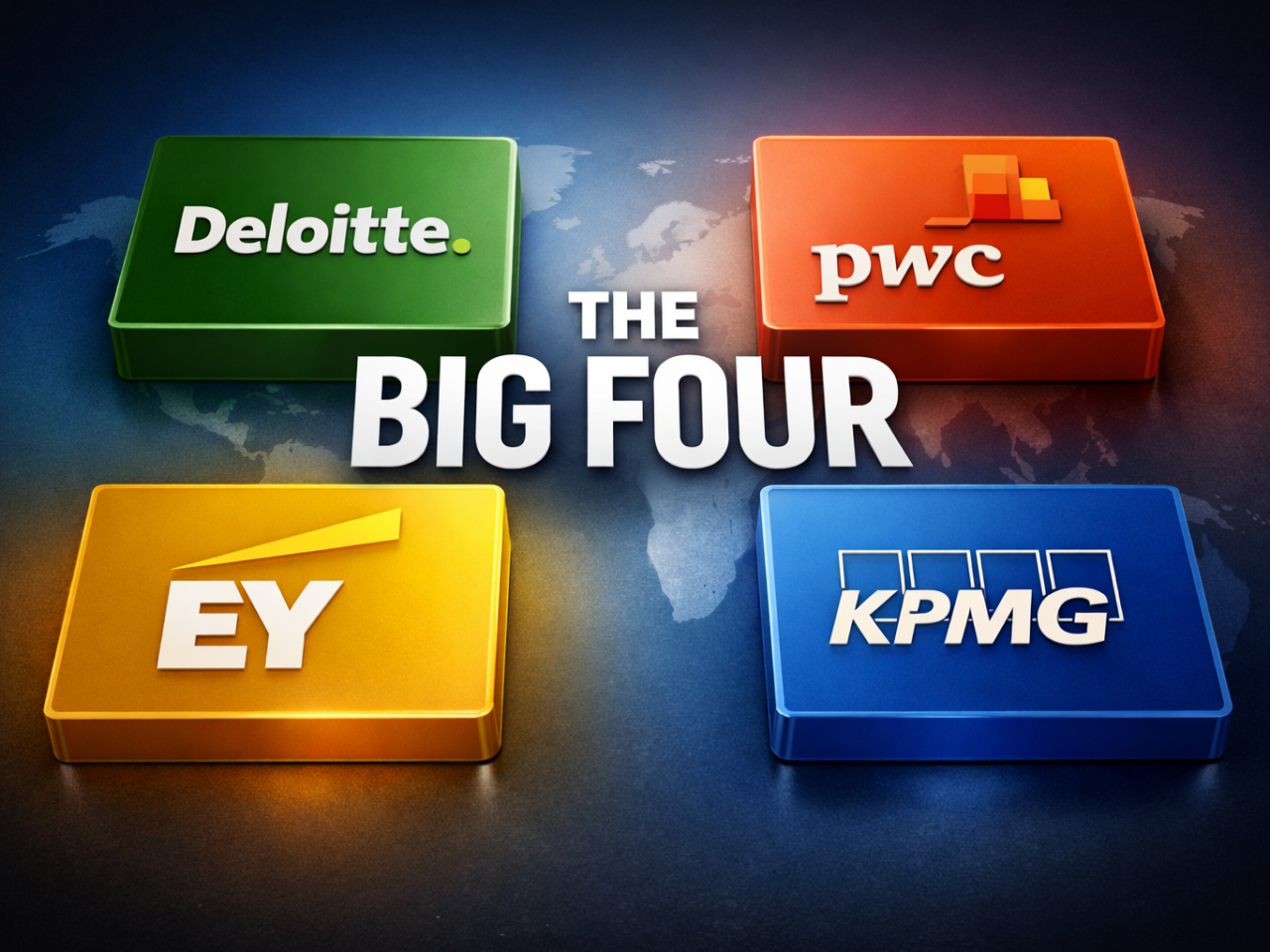
Four accounting firms once known for auditing balance sheets now shape the digital, regulatory and strategic architecture of modern states. As governments and corporations outsource expertise, Deloitte, PwC, EY and KPMG have become indispensable intermediaries — designing systems, interpreting geopolitics and increasingly certifying the safety of artificial intelligence. Their rise raises a critical question: who governs when governance itself is outsourced?
Read More
Tuesday, February 17, 2026

The real financial battlefield is not the trading floor, but the valuation engine. As the United States consolidates model power and Asia builds parallel infrastructures, Europe faces an uncomfortable question: can you shape global standards without owning the systems that compute value?
Read More
Tuesday, February 10, 2026

Telecom in Greece is no longer a consumer market but strategic infrastructure. In 2026, AI, energy constraints and geopolitics determine who is allowed to build, operate and be trusted with networks. This essay traces Greece’s shift from price competition to power, sovereignty and control.
Read More
Wednesday, January 28, 2026

For years, automation has been presented as a promise of control. Processes would become predictable. Risks measurable. Decisions traceable and compliant. When artificial intelligence entered the enterprise, that promise was reinforced with a familiar reassurance: there will always be a human in the loop.
Read More
Tuesday, January 20, 2026

For decades, European banking has been built around a visible moment of decision. A credit was approved. A risk was accepted. An exception was granted. There was a point in time — and a person — at which responsibility could be located. Today, that moment is becoming harder to identify.
Read More
Monday, January 19, 2026

Most discussions about artificial intelligence begin with innovation. This one should begin with power. SAP is not a visible technology giant in the public imagination. It does not shape culture, consumer behaviour or daily communication. Yet few companies exert more influence over the functioning of the global economy. An estimated 87 percent of worldwide trade touches SAP systems somewhere along its journey. Orders, invoices, customs declarations, supply chains and public-sector processes move through SAP’s logic layers every second of the day.
Read More
Tuesday, January 13, 2026

For many, the European AI Act is a dense legal document — a framework of obligations, risk categories and compliance mechanisms designed to bring order to a rapidly evolving technological field. But this reading misses a deeper and more consequential layer. What if the AI Act is not merely a regulatory instrument, but a cultural statement?
Read More
Friday, January 2, 2026
Artificial intelligence is often framed as a contest between platforms, startups and sovereign states. Public debate tends to revolve around models, chips and regulation. Yet beneath this visible layer lies a quieter infrastructure of influence: organisations that do not build AI themselves, but play a decisive role in how it is deployed, governed and ultimately normalised.
Read More
Monday, December 22, 2025

Algorithms rarely draw attention to themselves. They do not speak, persuade or campaign. Yet they increasingly decide how we move through cities, how markets function and how information reaches us. Their influence is subtle, procedural — and deeply political. To understand why algorithms matter today, it helps to start somewhere deceptively simple.
Read More

 Available here: