Oil Prices Are Falling. The Hormuz Crisis Is Not Over.
Global energy markets are adapting to disruption. But the economic risks are moving elsewhere — and Europe may be underestimating the consequences
Oil prices are falling, yet the Strait of Hormuz remains a fault line in the world economy. Crude exports are recovering while shipping costs, gas security and fertilizer supplies remain under pressure. The contradiction raises a sharper question: who benefits from market recovery, and who continues paying for disruption?
The crisis is no longer just about oil. It is about where the economic damage is accumulating.
🟦 If oil prices are falling, is the crisis really easing?
Only for part of the market. Gulf crude exports recovered substantially in October, helping push oil prices lower. Yet European diesel prices remained approximately 77% above pre-war levels, according to the IEA.
Crude markets are recovering. The wider energy system is not.
🟦 Is global trade adapting — or becoming permanently more expensive?
Alternative ports, overland bypasses through regional Gulf hubs and larger inventories are keeping goods moving. But every additional transfer, insurance premium and reserve stock carries a cost.
What appears to be resilience may actually represent a structural loss of efficiency. The crisis is changing the economics of global trade, not merely its geography.
🟦 Has Europe exchanged one energy dependency for another?
Europe reduced its dependence on Russian pipeline gas by expanding LNG imports. But LNG depends on maritime routes, global competition and limited storage capacity.
Diversification has increased flexibility without eliminating vulnerability. A prolonged Hormuz disruption could expose how much European energy security still depends on events beyond European control.
🟦 Could the next major shock arrive through food rather than energy?
Up to 30% of internationally traded fertilizers normally pass through Hormuz. The FAO warns that disrupted supplies and rising input costs could affect agricultural production into 2027.
Oil prices respond immediately. Agricultural production does not. The economic consequences of today’s disruption may only become visible during future harvests.
🟦 Can military deterrence restore economic confidence?
Warships can deter attacks and protect maritime routes. They cannot guarantee commercial confidence.
Shipowners, insurers and investors make decisions based on risks that may persist beyond any ceasefire. Even a diplomatic breakthrough would not necessarily reverse investments in alternative routes and infrastructure.
Military de-escalation and economic normalisation are two different processes.
The Altair Perspective
Hormuz reveals a fundamental weakness in how geopolitical risk is assessed. Financial markets react in days. Supply chains adapt over months. Agriculture and industrial investment may bear the consequences for years.
For Europe, the strategic question is therefore not simply how to secure alternative energy supplies, but how to prevent disruption in one critical corridor from spreading across entire economic systems.
Oil markets may recover before the crisis ends. The real question is how much of its cost becomes permanent.
Sources & Further Reading
- International Energy Agency — Oil Market Report, November 2026
- International Energy Agency — Global Gas Security Review 2026
- FAO — Strait of Hormuz Crisis and Global Food Security
- World Trade Organization — Strait of Hormuz and Global Trade
Image credit
AI-generated illustration / Altair Media
Caption
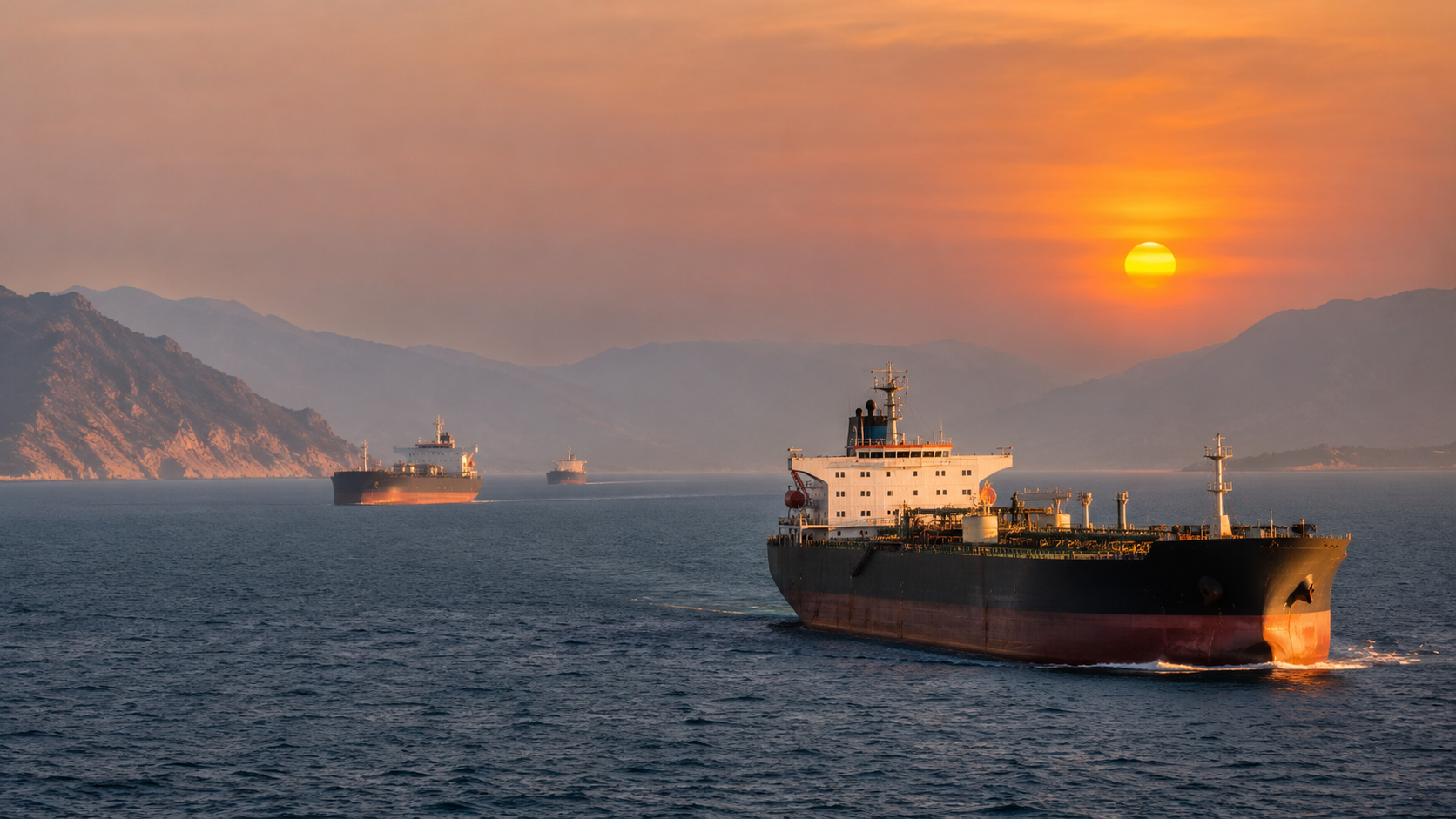
Oil tankers navigating a strategic maritime passage illustrate the continuing vulnerability of global energy supplies and international trade.
