A Breakthrough Is Not Yet a Product
Why the future of photonic computing depends on more than scientific discovery.
A new chip performs a remarkable calculation in a laboratory. The results are promising, researchers publish their findings and the technology attracts attention. But what happens when someone wants to manufacture a thousand of them?
A scientific breakthrough does not automatically become an industrial product.
What changes outside the laboratory?
In a laboratory, researchers can carefully adjust a device until it performs as intended.
Industrial production is different. Components must work reliably, manufacturing processes must be repeatable, and costs must be manageable.
A chip that works once is not enough. Industry needs technology that works consistently, at scale. That distinction is particularly important for photonic computing.
Can light and electronics become one system?
Photonic chips use light to carry information and, in certain applications, perform calculations. But they still depend on electronic components for many essential functions.
Bringing these technologies together requires precise manufacturing, packaging and testing. Even small variations in materials or temperature can affect optical performance.
The challenge is therefore not simply to demonstrate what light can do, but to make it work reliably alongside electronics.
Who turns discovery into industry?
Photonics is already an established industrial technology in optical communications and sensing. Its wider use in AI computing creates additional opportunities—and different engineering demands.
Researchers, chip designers, manufacturers and equipment suppliers must work together to turn promising designs into practical systems. This is one of the industrial questions explored in the revised second edition of The Age of Light.
The book examines why technological progress depends not only on scientific discoveries, but also on the capabilities needed to manufacture and integrate them.
Perhaps the most important breakthrough is not the moment a new technology works, but the moment we learn how to make it work reliably, again and again.
This article is part of The Age of Light — Rethinking Intelligence, a five-part Altair Media series accompanying the revised second edition of The Age of Light: Intelligence, Physics and the Future of Computing.

The Age of Light — Second Edition
What does it take to turn a scientific breakthrough into an industrial reality?
For curious readers, researchers, semiconductor professionals and industry leaders, The Age of Light explores the journey from scientific discovery to practical technology—and why manufacturing, reliability and cooperation are just as important as the breakthrough itself.
Available on Amazon
Kindle eBook — US $7.99; VK • DE • FR • ES • IT • NL • JP • BR • CA • MX • AU • IN
Paperback — US $16.99; VK • DE • FR • ES • IT • NL • PL • SE • BE • IE • JP • CA • AU
Hardcover — US $24.99; VK • DE • FR • ES • IT • NL • PL • SE • BE • IE
Prices shown for Amazon.com. Local prices may vary.
Credit
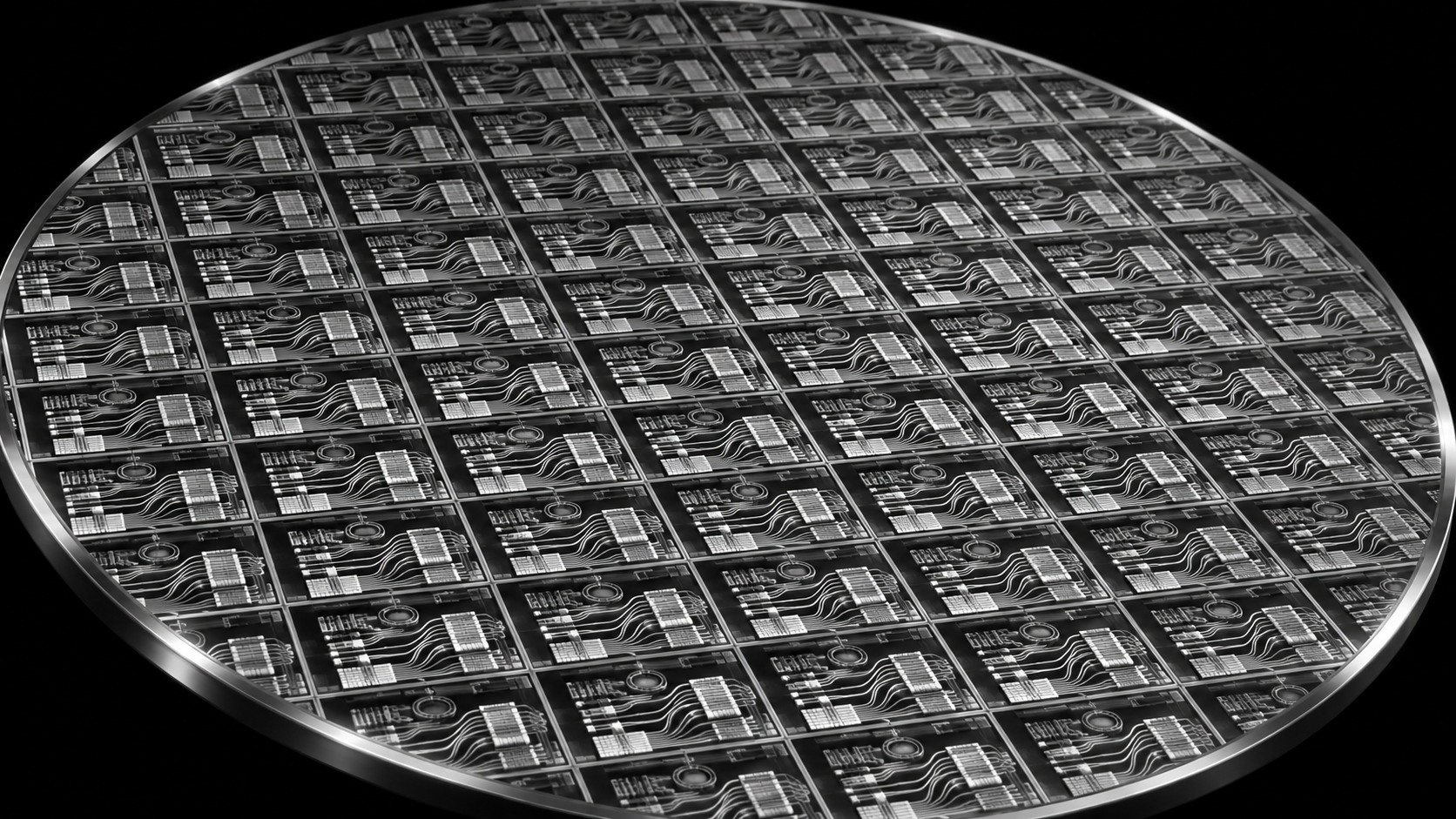
Illustration: AI-generated artwork created with OpenAI for Altair Media Europe.
Caption
From laboratory discovery to industrial production. A semiconductor wafer symbolises the challenge of manufacturing complex chip technologies reliably, consistently and at scale.
