Could Montenegro Become the EU’s 28th Member?
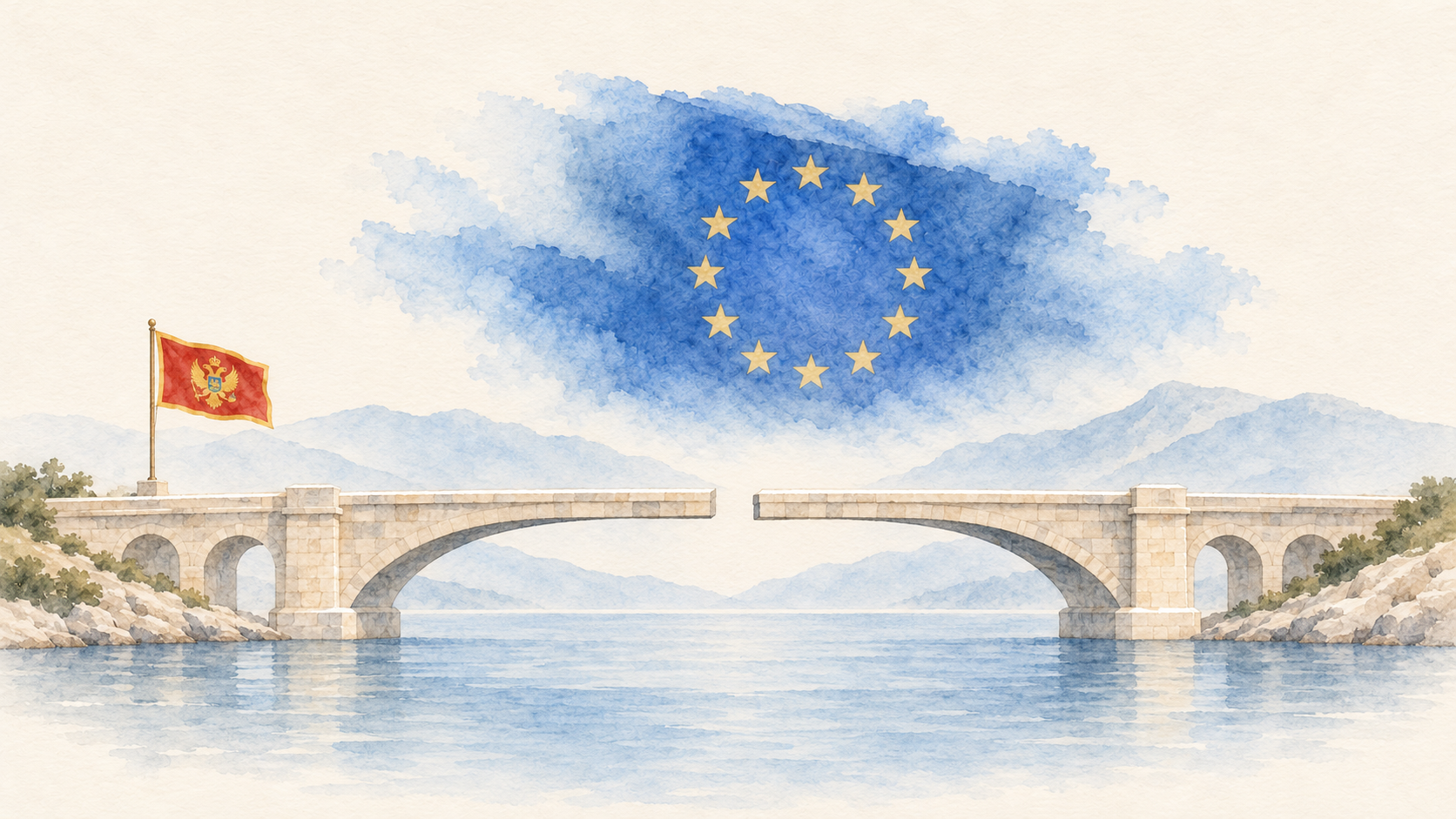
The Commission sees a path to a treaty signature in June 2027. Membership will test how well both sides have prepared.
Montenegro wants to join the European Union in 2028. The European Commission has set out two steps that could bring that goal closer: concluding negotiations as early as December 2026 and signing an accession treaty in June 2027. Both dates are indicative.
The timetable gives the EU decisions of its own to make. How would Montenegro enter the European budget? How would it be represented in the institutions? And what safeguards would apply once it becomes a member?
🟦 What has changed for Montenegro?
On 6 November, the EU and Montenegro provisionally closed negotiations on the free movement of goods and on food safety. Montenegro has now provisionally closed 23 of its 33 negotiating chapters. The individual agreements remain provisional until the parties reach an overall settlement.
Work on the accession treaty is already under way. Under the current model, Montenegro would have a commissioner, whose duty would be to the Union as a whole. The EU would also have to settle Montenegro’s representation in Parliament and account for a new member in Council votes. Under the standard qualified-majority rule, both the number of states and the share of the EU population they represent matter.
These are practical choices about how a Union of 28 would work. They can now be considered against a possible accession timetable.
🟦 What stands between a treaty signature and membership?
Before the treaty can be signed, the European Parliament must give its consent and the Council must approve admission unanimously. After signature, every contracting party must ratify the treaty according to its own constitutional rules.
That distinction matters for the 2028 target. Montenegro can advance its reforms and the Commission can propose dates for the next steps. The timetable also depends on decisions in the existing member states. Unanimity gives each of them a say in a decision that changes the Union for everyone.
🟦 What must the EU prepare on the budget?
The Commission has outlined how Montenegro could move from pre-accession assistance to the funds available to members and begin contributing to the EU budget. The Council is working on the assumption that accession could occur during the 2028–2034 budget period. The amounts are indicative, and the next long-term budget remains under negotiation.
The EU needs to agree how Montenegro would enter its funding programmes. Montenegro needs the administrative capacity to manage and audit the funds it receives. Both sets of arrangements need to work from the first day of membership.
🟦 What happens if reforms falter after accession?
During negotiations, the EU can make progress towards membership conditional on reform. Once a country joins, that source of leverage falls away. The Union then needs credible ways to uphold common obligations.
Under Article 7, the European Council must first establish a serious and persistent breach of EU values by unanimity, with the country concerned excluded from the vote. Once that finding is made, the Council can suspend rights, including voting rights, by qualified majority. The hurdle comes before the sanction.
The Commission’s October proposal would add a temporary safeguard to future accession treaties, starting with Montenegro. A proposed measure would be adopted unless a qualified majority in the Council voted to reject it within a set period. In the most serious cases, measures could include suspending Council voting rights. The clause would apply for 15 years after accession, with measures subject to judicial scrutiny and regular review. It would operate alongside Article 7.
That makes Montenegro’s treaty a first test of whether member states will accept a different way to enforce commitments after accession. The case for the safeguard depends on clear grounds for using it and a credible route to lifting measures once the breach has been remedied. The EU’s broader credibility still rests on how consistently it upholds its standards across all member states.
🟦 What does Montenegro’s timetable mean for Albania?
Albania has its own route. The Commission considers its goal of concluding negotiations by the end of 2027 achievable if it sustains reforms and fosters inclusive political dialogue. The roadmap leaves the date of membership open. An EU of 29 by 2029 remains a scenario.
What Montenegro can provide is a practical example of how the EU handles the next stage: agreeing a treaty, preparing the budget and defining safeguards that can work after accession. Those decisions could make the process more predictable for Albania, whose progress will still depend on its own reforms.
Signal
For Montenegro, 2028 is a target. For the EU, it is a deadline to plan against. The Union has work of its own to do on funding, representation and the enforcement of common rules.
A credible accession timetable tells both sides what they must have ready by the day the new member joins.
This Altair Signal accompanies Europe’s Power to Decide, following A Larger Europe Needs a Different Decision-Making System.
Credit
AI-generated watercolour illustration created with OpenAI for Altair Media.
Caption
An unfinished bridge in a landscape inspired by the Bay of Kotor symbolises the work Montenegro and the European Union must each complete before accession.
