Monday, December 8, 2025

Europe’s quest for digital sovereignty is no longer a theoretical debate; it is a pressing strategic challenge. The continent, with its long history of innovation and strong governance, must ask itself: can it build a digital future on its own terms or has it already ceded too much control to global tech giants? This question is not only about technology—it is about Europe’s ability to protect its values, its institutions and its citizens in a world dominated by digital networks.
Read More
Saturday, December 6, 2025

Imagine the world of artificial intelligence as a grand theater production, where the curtain rises on three distinct acts. In the blinding spotlights of center stage stand the Magnificent Seven – a cadre of American tech titans whose combined market capitalization hit $20.8 trillion by late 2025, eclipsing the European Union’s entire GDP of $19.4 trillion. These companies – Apple, Amazon, Alphabet, Meta, Microsoft, Nvidia, and Tesla – don’t just perform; they rewrite the script, dictating the pace of innovation with a charisma that’s impossible to ignore.
Read More
Friday, December 5, 2025

Yesterday Geoffrey Hinton, the man who taught machines to dream, gave his verdict: Google will win the AI race. Not maybe. Not probably. Will.
Read More
Wednesday, December 3, 2025

Poland is not always the first country mentioned when discussing Europe’s AI landscape. Yet beneath the surface, the country is building momentum with surprising speed. What started as scattered research initiatives has grown into a coordinated national strategy — supported by government funding, major infrastructure projects, expanding academic programs and a growing private-sector footprint.
Read More
Tuesday, December 2, 2025

For years, Germany has been described as Europe’s “industrial engine”, a country where engineering discipline meets long-term economic planning. As artificial intelligence accelerates globally, Germany finds itself at a crossroads: well-equipped with research depth, industrial muscle and public investment—but also challenged by the speed, capital intensity and platform dynamics that define the AI race. What emerges today is a nation trying to translate a century of industrial expertise into leadership within a technology wave dominated elsewhere by hyperscale software ecosystems.
Read More
Thursday, November 27, 2025
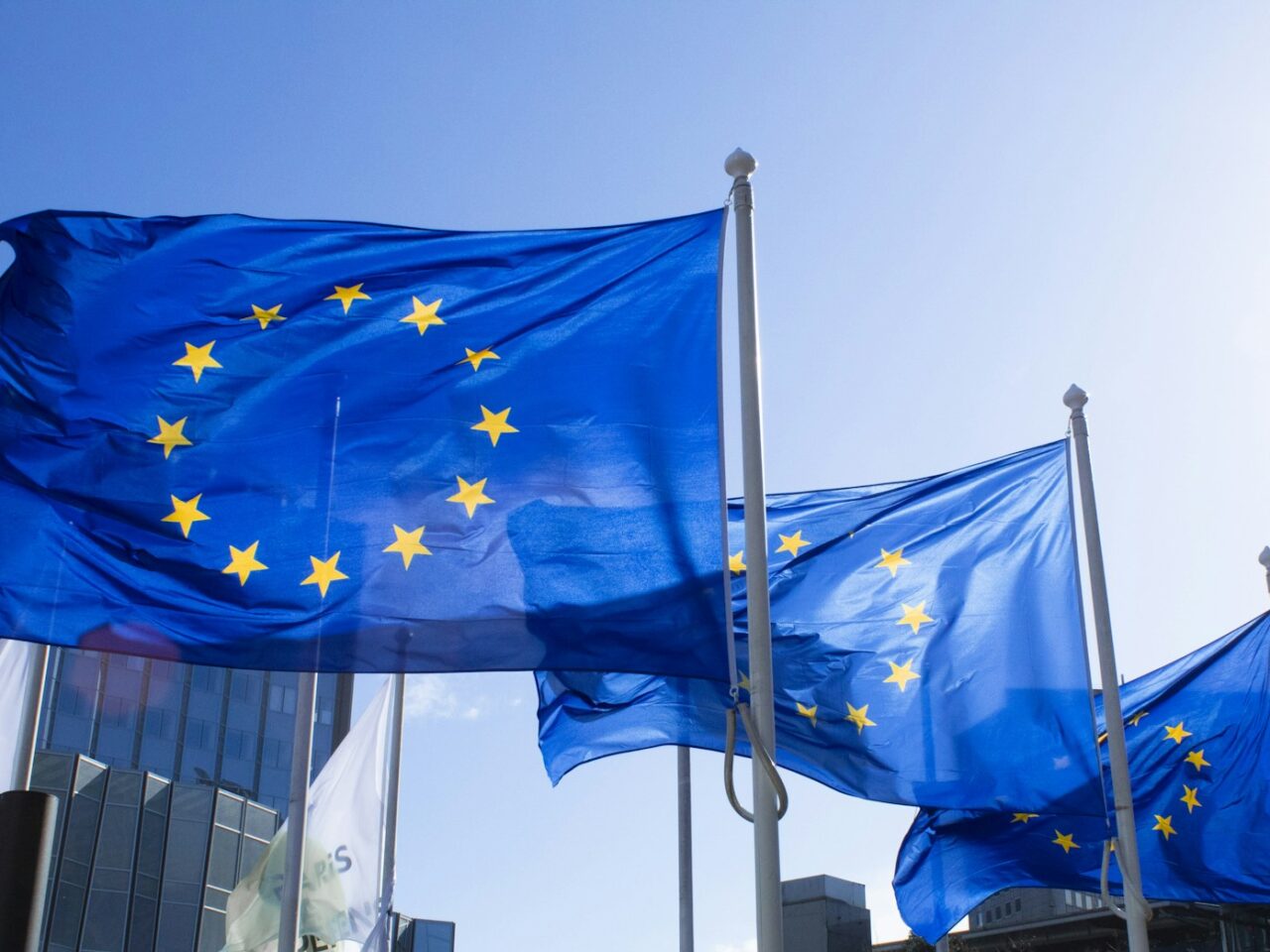
When Thierry Breton stepped down as European Commissioner in 2024, he left behind a legacy of ambition and vision for Europe’s technological future. Breton had pushed for digital sovereignty, stronger industrial and AI policies and a robust regulatory framework. Yet, the landscape he helped shape has evolved into something far more complex than any single individual could steer.
Read More
Wednesday, November 26, 2025

In the world of artificial intelligence, giants like NVIDIA dominate the conversation. Yet a European player is quietly making waves: Axelera AI, a Dutch startup focused on high-performance, energy-efficient AI chips. Often compared to NVIDIA — sometimes even by themselves — Axelera promises a striking advantage: up to a hundred times faster performance in specific applications, all while operating at a fraction of the scale and cost of large GPU makers.
Read More
Wednesday, November 26, 2025

Europe likes to present itself as the world’s digital rule-maker. From the AI Act to the Digital Markets Act, from data governance to platform accountability, the European Union has built the most expansive regulatory framework for the digital economy anywhere on earth. But behind the headlines and the political theatre lies a more complex question—one that is rarely asked, yet essential for understanding Europe’s technological trajectory. Who actually holds the power to shape Europe’s digital future?
Read More
Monday, November 24, 2025

Europe has spent the last decade defining itself through rules. From data protection to online platforms and now artificial intelligence, the continent has become the world’s most assertive regulatory power. It is a role Europe embraces proudly: the guardian of ethics, human rights and democratic values in a digital age often dominated by commercial or authoritarian interests.
Read More
Saturday, November 22, 2025

Europe loves the idea of speaking with one voice on artificial intelligence. It imagines itself as a unified digital bloc, capable of regulating, innovating and competing on equal terms. But behind the political speeches and shared legislation lies a reality that is far more complex: Europe does not inhabit one digital future — it inhabits twenty-seven.
Read More

 Available here: