Monday, May 4, 2026

Europe’s fragmented quantum landscape may appear inefficient, but it enables multiple technological paths to evolve in parallel. In an uncertain field, this diversity creates resilience—reducing systemic risk and allowing innovation to adapt as the technology matures.
Read More
Monday, May 4, 2026

Quantum computing will not be defined by standalone machines, but by how systems are integrated. In Europe, this shift is visible in the coupling of quantum and classical computing—positioning infrastructure, rather than platforms, as the real source of control.
Read More
Monday, May 4, 2026

Europe is not leading the quantum race in headlines—but it may be shaping the infrastructure that will ultimately define it. Beneath the surface, a quieter strategy is taking shape.
Read More
Wednesday, April 29, 2026

Europe’s approach to AI is not defined by speed or scale alone, but by the conditions under which systems operate. As capability, deployment and governance converge, the question becomes whether Europe can build AI on its own terms.
Read More
Wednesday, April 29, 2026

Amazon has built a form of infrastructure that operates beyond borders, decoupling geography from control. As Europe’s economy increasingly depends on this layer, the question is no longer where data resides—but where the system itself is governed.
Read More
Tuesday, April 28, 2026
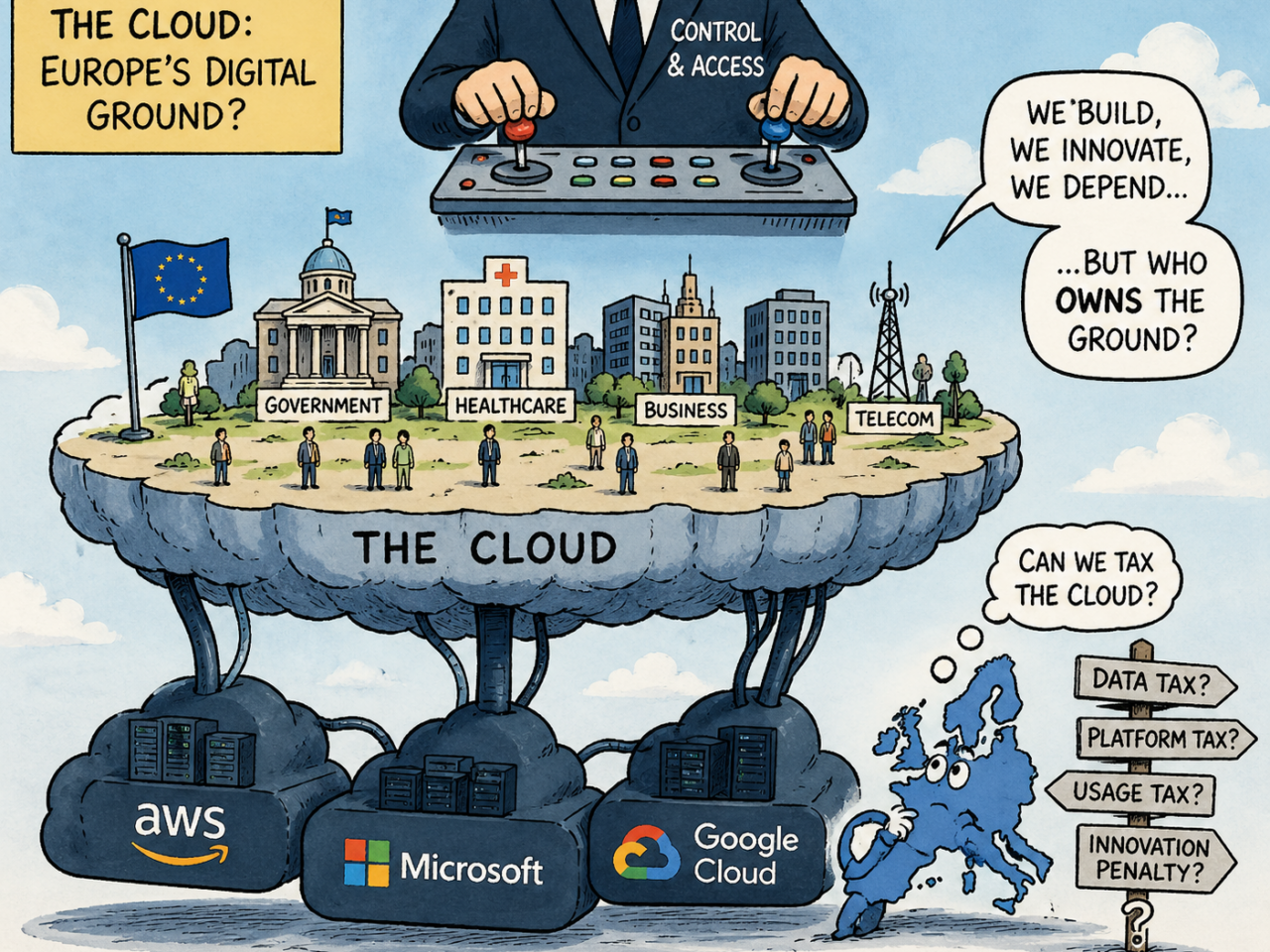
If the cloud is the new ground on which economies run, who has the right to tax it? Europe’s challenge is no longer regulating markets, but governing a system where value, control and dependency have shifted beyond infrastructure.
Read More
Tuesday, April 28, 2026
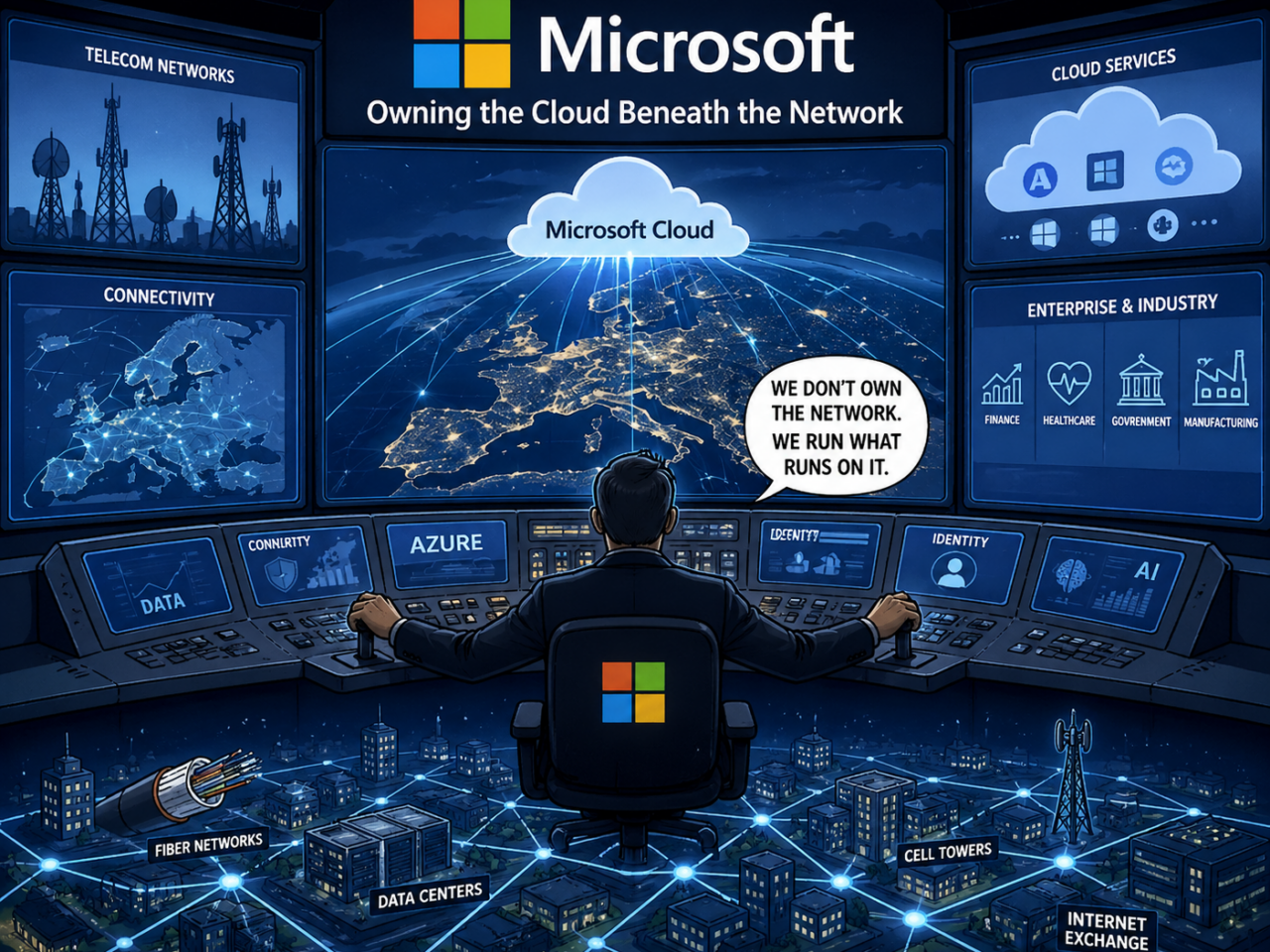
Microsoft does not own Europe’s networks—but increasingly shapes how they operate. As telecom shifts toward software and cloud-based infrastructure, control moves from hardware to platforms, raising a critical question: who governs the system behind the network?
Read More
Monday, April 27, 2026

Ericsson defines how networks function—through standards, patents and the physics of connectivity. But as power shifts toward cloud and orchestration, the question is whether control at this foundational layer can translate into influence across the system.
Read More
Monday, April 27, 2026

Nokia does not operate Europe’s networks—but helps design them. As telecom shifts toward software, standards and 6G architecture, its role becomes strategic. The question is whether design influence can translate into control in a system defined above the network.
Read More
Monday, April 27, 2026

TIM reveals the hidden struggle beneath Europe’s digital infrastructure. As debt, private equity and national interests collide, control over networks becomes fluid—raising a deeper question: who owns sovereignty when infrastructure itself is in play?
Read More

 Available here:
