Thursday, March 5, 2026

MWC 2026 shows how the telecom industry is moving beyond devices toward intelligent infrastructure. From AI-native networks and satellite connectivity to digital sovereignty and photonics, the foundations of a new digital economy are emerging beneath the surface of the mobile industry.
Read More
Monday, March 2, 2026

At MWC 2026, the real story is not faster devices but control over the infrastructure that will shape economies, cities and security in the 2030s. As 6G moves from connectivity to sensing and AI integration, Europe faces a defining sovereignty test.
Read More
Wednesday, February 18, 2026

As financial markets evolve into geopolitical infrastructures, Europe may lack scale but retains rule-making power. This analysis explores how governance, standards and market access can become strategic instruments — transforming regulation from defensive compliance into a foundation for long-term economic sovereignty.
Read More
Tuesday, February 17, 2026

Satellite-to-smartphone services mark a structural shift from geographic coverage to continuous connectivity. As terrestrial networks merge with orbital infrastructure, communication becomes an ambient utility — reshaping resilience, sovereignty, economic security and the very meaning of being reachable in a permanently connected society.
Read More
Tuesday, February 17, 2026

The real financial battlefield is not the trading floor, but the valuation engine. As the United States consolidates model power and Asia builds parallel infrastructures, Europe faces an uncomfortable question: can you shape global standards without owning the systems that compute value?
Read More
Friday, February 13, 2026

Europe’s telecommunications sector is undergoing a structural redefinition. What was once treated as a competitive consumer market is now recognised as strategic infrastructure — a foundational layer for artificial intelligence, cloud computing, defence coordination and democratic governance.
Read More
Thursday, February 12, 2026

Europe speaks increasingly loudly about digital sovereignty. In policy papers, keynote speeches and regulatory frameworks, the ambition is clear: to regain strategic autonomy in a world shaped by American and Asian technology platforms. Yet behind this language lies a structural contradiction. Europe possesses rules, but lacks executional authority over its own digital infrastructure.
Read More
Thursday, February 12, 2026

For most of the past three decades, each new generation of mobile technology followed a familiar Western script. Research was global, markets were competitive and standards were treated as neutral plumbing — slow, technical and largely apolitical. Power flowed from consumption: whoever deployed networks fastest and sold the most devices shaped the ecosystem.
Read More
Wednesday, February 11, 2026
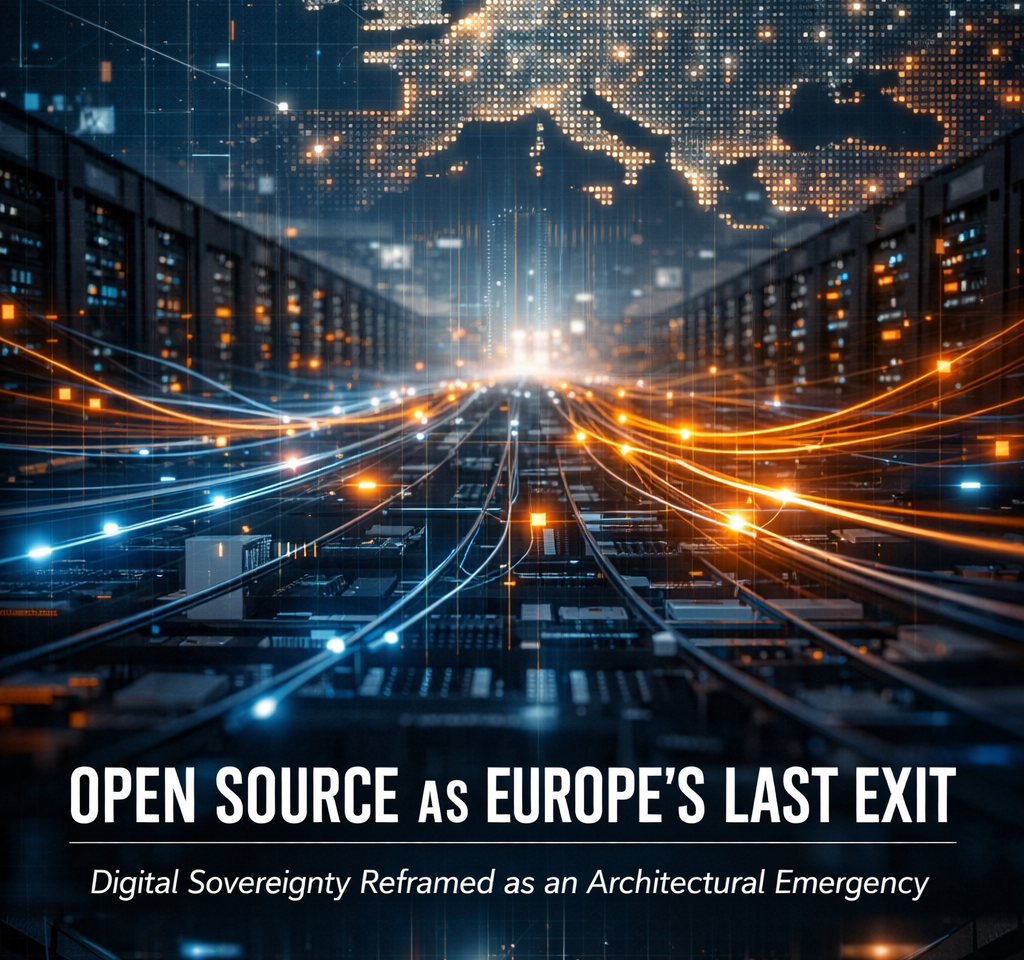
This article is prompted by a concrete intervention. In early 2026, Orange EU Policy submitted a formal contribution to the European Commission’s call for evidence on Open Digital Ecosystems. On the surface, it reads like a policy position on open-source software. Read more carefully and it reveals something else: a large European telecom incumbent signalling that the old proprietary model no longer offers strategic shelter.
Read More
Tuesday, February 10, 2026

Telecom in Greece is no longer a consumer market but strategic infrastructure. In 2026, AI, energy constraints and geopolitics determine who is allowed to build, operate and be trusted with networks. This essay traces Greece’s shift from price competition to power, sovereignty and control.
Read More

 Available here:
