Signal – Airbus and the Architecture of European Capability
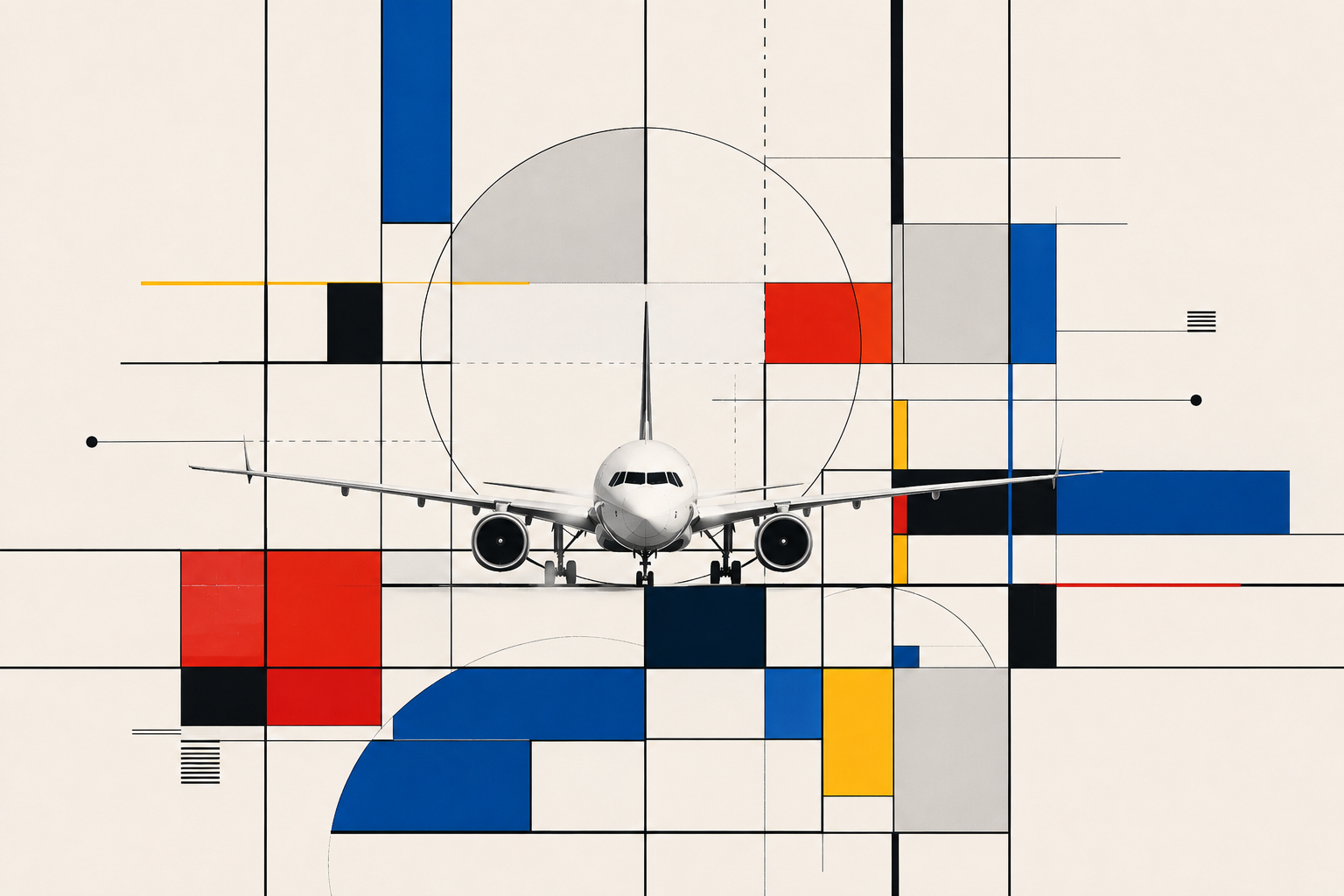
Why one company reveals how Europe builds strategic industrial capacity
Most people know Airbus as a manufacturer of commercial aircraft. They see passenger jets, airline fleets and competition with Boeing. Yet aviation is only the visible outcome of a much larger project.
Airbus was created to solve a challenge that Europe continues to face today. How can nations maintain strategic industrial capabilities when the scale required to compete exceeds the capacity of any single state?
The answer was not simply to build aircraft. The answer was to build capability.
For much of the twentieth century, the global aviation industry was dominated by American manufacturers. Individual European countries possessed world-class engineers, universities and industrial expertise, but none possessed the domestic market or financial scale required to compete alone. To accept this imbalance would have meant accepting technological dependence.
Instead, Europe pursued a different experiment. Countries that were often economic competitors agreed to share investment, distribute production and coordinate industrial strategy across borders. Wings would be built in one country, fuselage sections in another and final assembly elsewhere. What emerged was not merely a company, but a new model for organising industrial power.
Airbus became an institutional response to fragmentation. It transformed national capabilities into continental capability.
🟦 The Scale Question
How can Europe compete in industries that have become too large for any single nation to sustain alone?
At first glance, Airbus appears to be an aviation company. In reality, it represents one of the largest industrial coordination projects in modern European history. Every aircraft embodies the cooperation of thousands of suppliers, research institutes, manufacturers and specialised engineering firms distributed across the continent.
Airbus was not created to build aircraft. It was created to build capability at European scale.
This scale is Airbus’s greatest strength. It is also one of its greatest vulnerabilities. A modern aircraft is, in many respects, a flying supply chain. Delays at a single highly specialised supplier can affect production across multiple countries. The same interconnectedness that creates capability also creates dependency.
The challenge is no longer simply manufacturing. The challenge is coordination.
🟦 The Sovereignty Question
Can strategic autonomy be achieved through cooperation rather than national control?
Airbus sits at the intersection of a uniquely European paradox. Most discussions of sovereignty assume that autonomy requires control. Airbus suggests something different. Strategic autonomy may sometimes require nations to surrender a degree of individual control in order to achieve collective capability.
This tension is particularly visible beyond commercial aviation. Defence systems, military transport aircraft, satellites, secure communications networks and space technologies increasingly depend upon multinational cooperation. The result is a model in which sovereignty is not concentrated within a single state, but distributed across an interconnected industrial architecture.
The arrangement is powerful. It is also inherently political. Strategic priorities do not always align. National interests do not always converge. Capability requires constant negotiation.
🟦 The Dependency Question
Does a continental capability reduce dependence on foreign powers or create new dependencies within Europe itself?
The creation of Airbus reduced Europe’s dependence on external manufacturers. Yet it also created new forms of interdependence within Europe.
Industrial ecosystems rely on trust, coordination and long-term commitment. They require governments, companies and institutions to invest beyond immediate political and financial cycles. This challenge is becoming increasingly familiar.
The same questions now appear in semiconductors, artificial intelligence, energy infrastructure and cloud computing. How much redundancy is necessary? How much efficiency is too much? And how resilient can highly specialised ecosystems remain during periods of geopolitical uncertainty?
🟦 The Future Question
If Airbus was the industrial project of the twentieth century, what will be the Airbus of the twenty-first?
As Europe debates artificial intelligence, advanced semiconductors, quantum technologies and strategic energy systems, the lessons of Airbus are becoming increasingly relevant.
The company demonstrates that strategic capability is rarely created through market forces alone. It requires institutions. It requires patience. It requires long-term coordination.
Most importantly, it requires a shared understanding that certain capabilities are too important to leave entirely to short-term economic logic.
Sovereignty does not emerge from declarations. It emerges from capabilities. And capabilities require institutions capable of sustaining them across generations.
Airbus therefore offers more than a story about aviation. It provides a blueprint for understanding how Europe might build and sustain strategic capability in the decades ahead.
In This Series
Part 1 — Airbus Commercial Aircraft and the Economics of Scale
How Europe built a global competitor in commercial aviation.
Part 2 — Airbus Defence and Space and the Return of Sovereignty
Why defence, satellites and strategic autonomy are becoming increasingly interconnected.
Part 3 — Airbus Helicopters and the Value of Specialisation
How resilience often depends on highly specialised capabilities.
Part 4 — Can Europe Afford to Lose Airbus?
What Airbus reveals about the strategic value of industrial capacity in the twenty-first century.
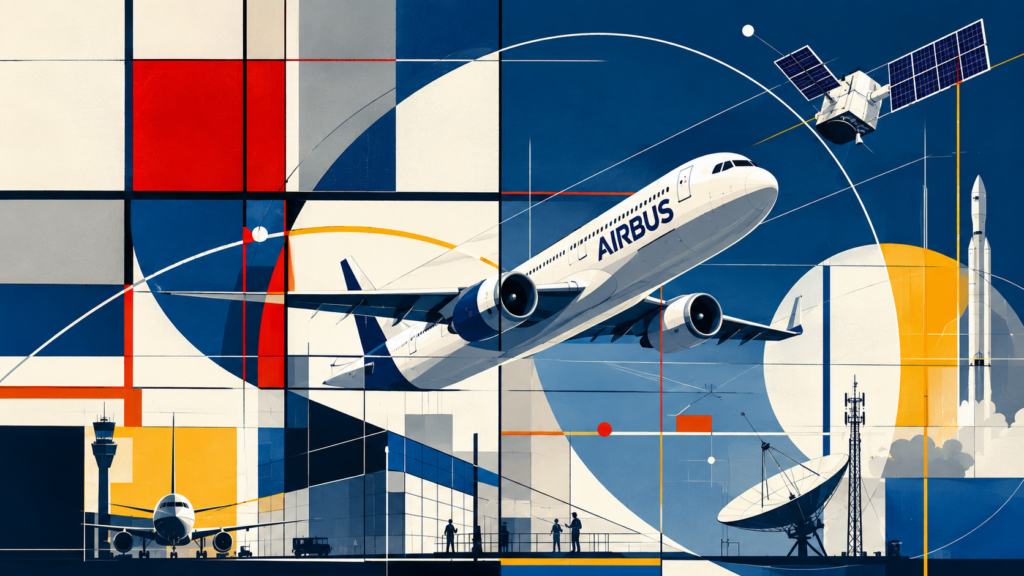
Credit
Illustration by Altair Media (AI-assisted visualisation inspired by modern European geometric art and industrial architecture)
Caption
Airbus is often described as an aircraft manufacturer. This illustration instead explores Airbus as a system of scale, sovereignty and industrial capability spanning Europe.

You might like this angle for redirecting ecosystems https://paul4innovating.com/2026/06/22/adding-fusion-into-the-european-innovation-scaling-mix/