Saturday, August 22, 2026

Europe’s food system extends far beyond the farm. Agriculture increasingly connects biology with energy, chemistry, technology, logistics, research and finance — creating a complex European system behind the ordinary food we encounter every day.
Read More
Saturday, August 22, 2026

Northern Italy demonstrates how connectivity becomes production. Across the Milan–Turin corridor, private 5G, edge computing, artificial intelligence and advanced manufacturing converge to transform factories into intelligent production environments—where Europe’s digital infrastructure ultimately creates physical value.
Read More
Friday, August 21, 2026

As artificial intelligence moves beyond centralised data centres, networks become part of the computing architecture itself. Nokia’s transformation reveals how Europe’s strengths in optical networking, telecommunications and edge infrastructure could connect intelligence to the physical economy.
Read More
Friday, August 21, 2026

Europe’s fruit industry does more than preserve the harvest. It transforms biological variation into industrial reliability, using agronomy, processing, energy, logistics and ingredient technology to make seasonal fruit available in predictable forms throughout the year.
Read More
Friday, August 21, 2026
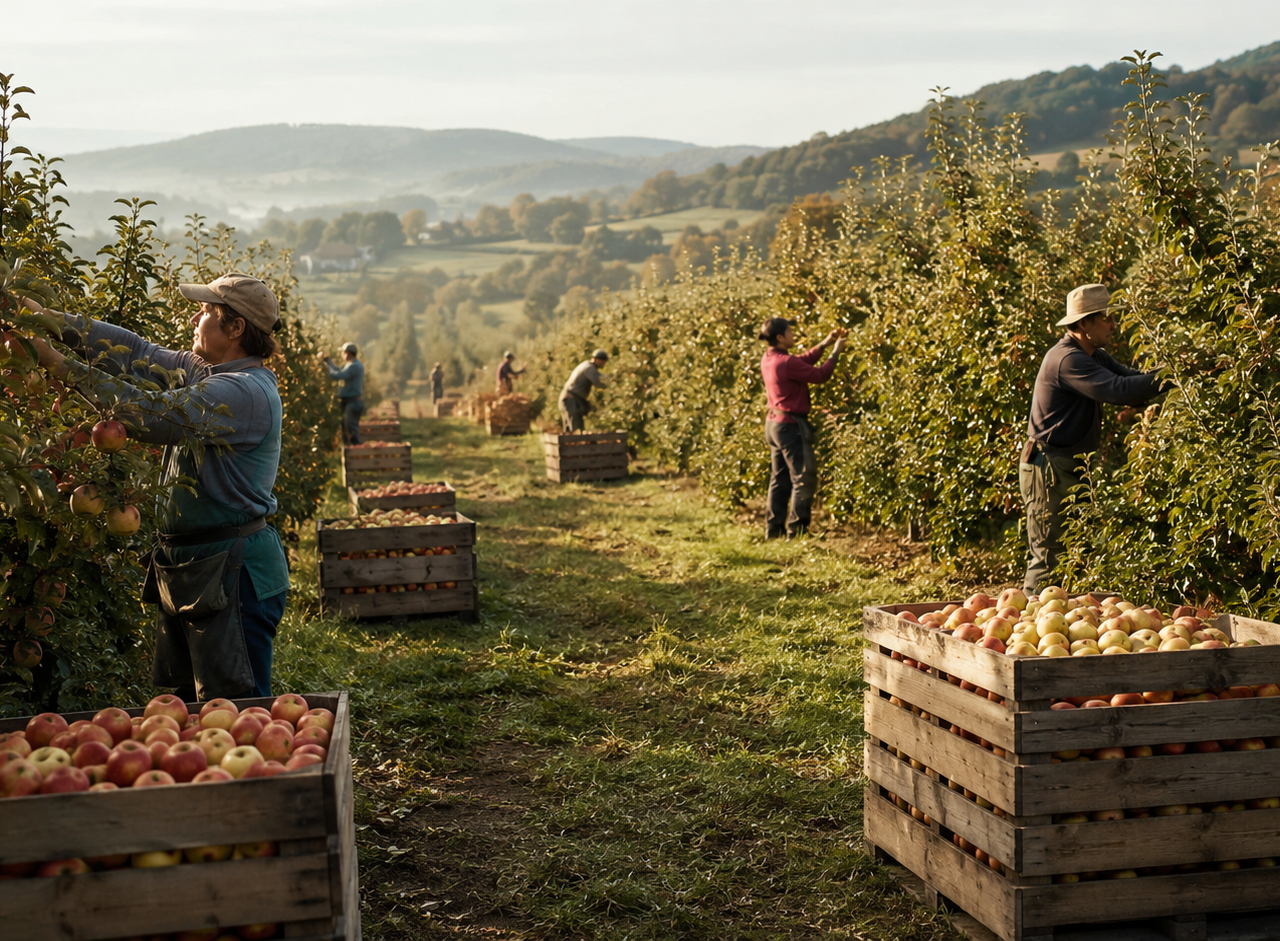
Behind Europe’s familiar jams, yoghurts and fruit snacks lies a sophisticated industrial system that transforms seasonal harvests into standardised ingredients, stable supply chains and year-round products—connecting orchards, processors, food technology, packaging and global consumer brands.
Read More
Friday, August 21, 2026

Europe’s financial architecture does not end with its European institutions. National supervisors and central banks remain essential because integration depends not on eliminating local authority, but on connecting it coherently with the European level.
Read More
Friday, August 21, 2026

A serious financial architecture cannot be built on the assumption that institutions never fail. The Single Resolution Board exists to make bank failure manageable — preserving critical functions while ensuring that shareholders, creditors and institutions themselves can still bear the consequences.
Read More
Thursday, August 20, 2026

EQT has identified more than 1,000 potential targets for the Scaleup Europe Fund. The deeper question is what happens next: whether Europe’s exchanges, institutional investors and regulators are ready when today’s scale-ups become tomorrow’s multibillion-euro public companies.
Read More
Thursday, August 20, 2026

Europe wants deeper capital markets, but its banking layer remains indispensable. The EBA’s role is to keep that layer coherent across the Single Market — strong enough to absorb shocks, flexible enough to support growth, and connected enough to work with capital markets.
Read More
Thursday, August 20, 2026

Europe’s capital markets do not operate independently. Beneath every share, bond and investment fund lies a monetary system that prices risk, provides liquidity and settles transactions. The ECB guards the stability on which this emerging market architecture rests.
Read More

 Available here:
