Sunday, February 15, 2026

As AI shifts power from software to hardware, Europe confronts a deeper vulnerability: dependence on foreign compute infrastructure. Initiatives like PIXSpain aim to rebuild strategic autonomy at the physical layer — where chips, energy and photonics increasingly determine economic and geopolitical power.
Read More
Friday, February 13, 2026

A senior European photonics leader leaves a flagship public institute for Huawei’s research center in London — a move that illuminates far more than a personal career shift. It reveals the growing struggle over who will control the physical infrastructure of AI, telecom networks and the digital economy.
Read More
Monday, February 9, 2026

For years, photonics has been presented as a technology of the future — elegant, powerful and perpetually just over the horizon. It appears in research agendas and innovation strategies alongside quantum computing and other long-term breakthroughs. As a result, it is still widely perceived as experimental rather than structural.
Read More
Wednesday, February 4, 2026

The Age of Light is not a scientific treatise, nor does it seek to replace or rival ongoing research. It is a reflective work that moves alongside science — drawing on physics, computer science, philosophy and systems thinking to explore how intelligence is changing in form and meaning.
Read More
Thursday, January 8, 2026

Quantum computing is often presented as a race between exotic physics concepts and dazzling promises of exponential speed-ups. In practice, however, the decisive question is far more down to earth: which technologies can actually be engineered, manufactured and maintained at scale?
Read More
Wednesday, January 7, 2026
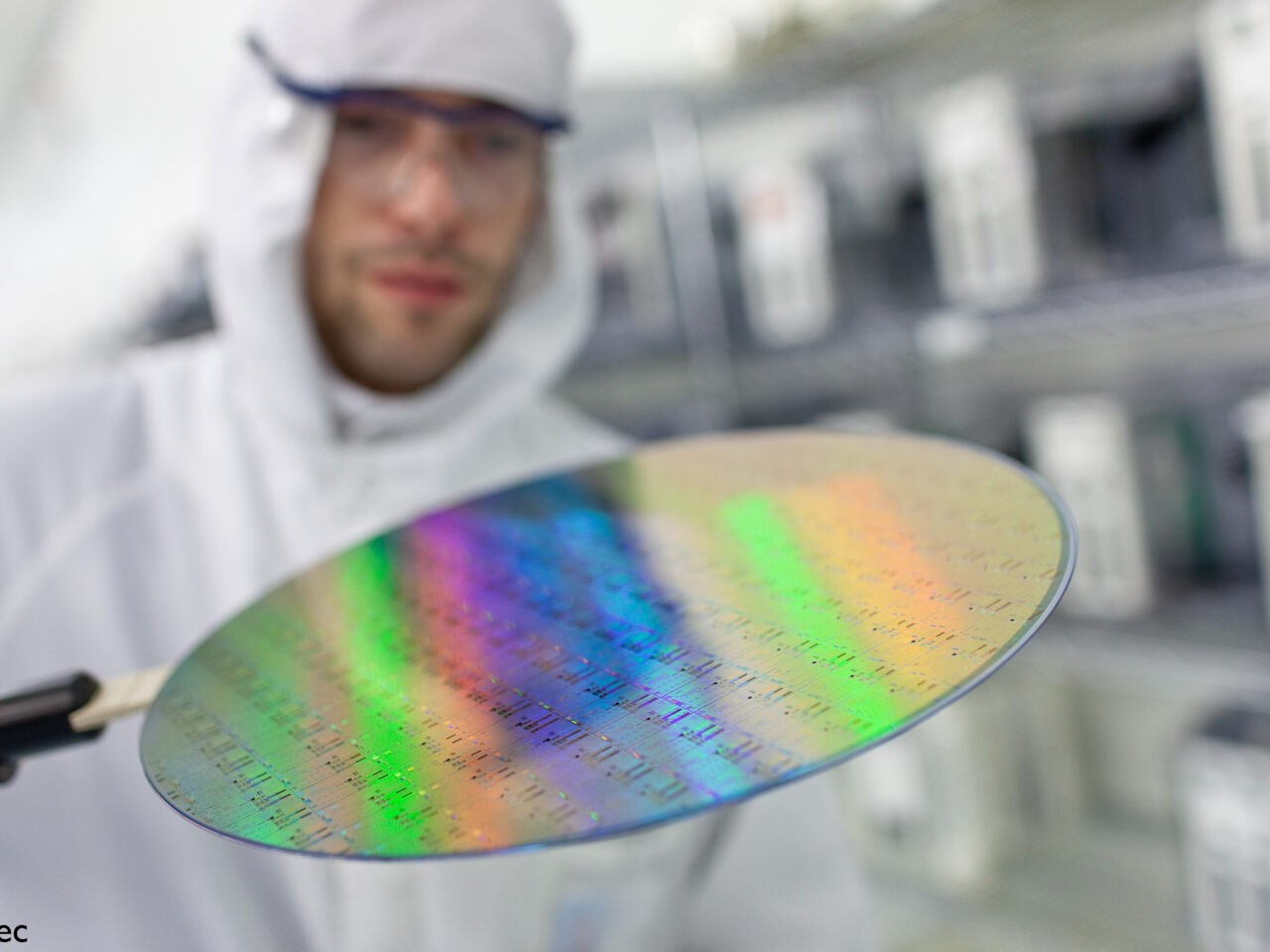
In global discussions about semiconductors, the focus tends to drift toward factories, supply chains and geopolitical leverage. Attention goes to where chips are manufactured, who controls production capacity and how nations secure access to critical technologies. Yet these debates often overlook a more fundamental question: where do future chip technologies actually originate?
Read More
Sunday, December 28, 2025

For decades, Silicon Valley defined the global technology narrative. Startups, venture capital and rapid software innovation drew the world’s attention. Today, a quieter but far more consequential shift is underway. A new configuration is emerging — a triangle connecting the Netherlands, Dallas–Fort Worth in Texas and Bengaluru in India — that is quietly defining the future of deep technology.
Read More
Saturday, December 20, 2025

Photonics underpins the digital systems that power modern societies, from fibre-optic networks to advanced semiconductors. As China develops its own EUV prototype and technology ecosystems fragment, control over light is emerging as a key geopolitical asset. Europe’s current leadership is real — but not guaranteed.
Read More
Saturday, December 20, 2025
Photonics is not a buzzword. It is the technology that carries the internet across oceans, enables chips to be etched at atomic scale and forms the foundation of future quantum systems. From fibre-optic communications to advanced manufacturing, photonics has become a critical enabler of modern societies. By 2030, the global photonics market is expected to exceed one trillion dollars. Yet at the heart of this rapidly expanding field lies a strategic chokepoint: extreme ultraviolet (EUV) lithography.
Read More
Sunday, November 23, 2025

When people talk about cutting-edge technology, they often think of the giants that dominate software and AI — Google, Apple, Meta, Nvidia, OpenAI. But the foundations of global innovation increasingly rely on something far more complex, far more fragile and far harder to replicate: deep hardware ecosystems.
Read More

 Available here:
