Monday, December 1, 2025

Europe has capital—immense pools of it—but much of that money never quite finds its way into the companies that could shape the continent’s technological or industrial future. On paper, Europe should be an investor’s dream: deep pension systems, world-class sovereign wealth players and a highly educated innovation ecosystem. Yet the deployment pattern tells a different story. Institutional investors continue to favour the United States, sprinkle selective exposure across Asia and keep their European allocations safe, liquid and conservative. The root cause is not a lack of ambition. It is a system that rewards caution and punishes scale.
Read More
Sunday, November 30, 2025

Europe speaks confidently about ethics, governance and responsible AI — but the real contest sits one layer deeper. AI ultimately runs on compute and Europe’s lack of sovereign, scalable compute infrastructure is becoming its most strategic vulnerability. The continent does not suffer from a model gap, but from a power gap.
Read More
Sunday, November 30, 2025

Quantum computing has entered a new phase—one marked by bold claims, rising expectations and a growing sense that the field may be accelerating faster than the public realises. In October 2025, Google unveiled the so-called Quantum Echoes algorithm, reporting a 13,000-fold speedup on its new Willow processor compared with the world’s most powerful classical supercomputer. According to Google, this marks the first practically useful form of quantum advantage—a milestone the industry has been chasing for years.
Read More
Saturday, November 29, 2025

Quantum computing is not just the next step in computing: it is a fundamentally different paradigm. Unlike traditional computers, which use bits that are either 0 or 1, a quantum computer uses quantum bits — qubits. These qubits can exist in superposition (both 0 and 1 simultaneously) and can become entangled with one another, meaning their states become deeply linked even when separated.
Read More
Friday, November 28, 2025

Scandinavia is not building an AI empire — it is building Europe’s most human-centric, digitally mature ecosystem. Finland and Sweden combine deep digital readiness with a pragmatic philosophy: AI is not meant to impress, but to work. Here, AI is treated not as a vision of the future, but as a public utility.
Read More
Friday, November 28, 2025

The Netherlands is not a numerical AI superpower — but it is an influential one. While other countries talk big, the Dutch build the components that keep the global system running. No hype cycles, no billion-dollar theatrics: the strength of the Netherlands lies in precision, infrastructure and reliability.
Read More
Thursday, November 27, 2025

When it comes to artificial intelligence, it’s as if Europe, the United States and China are playing entirely different games. Europe writes the rules. The US builds the race-cars — fast, aggressive and often messy. China tries to build an entire ecosystem, from roads to regulations to surveillance. In this global match, what counts is not only how you play, but how and why.
Read More
Thursday, November 27, 2025
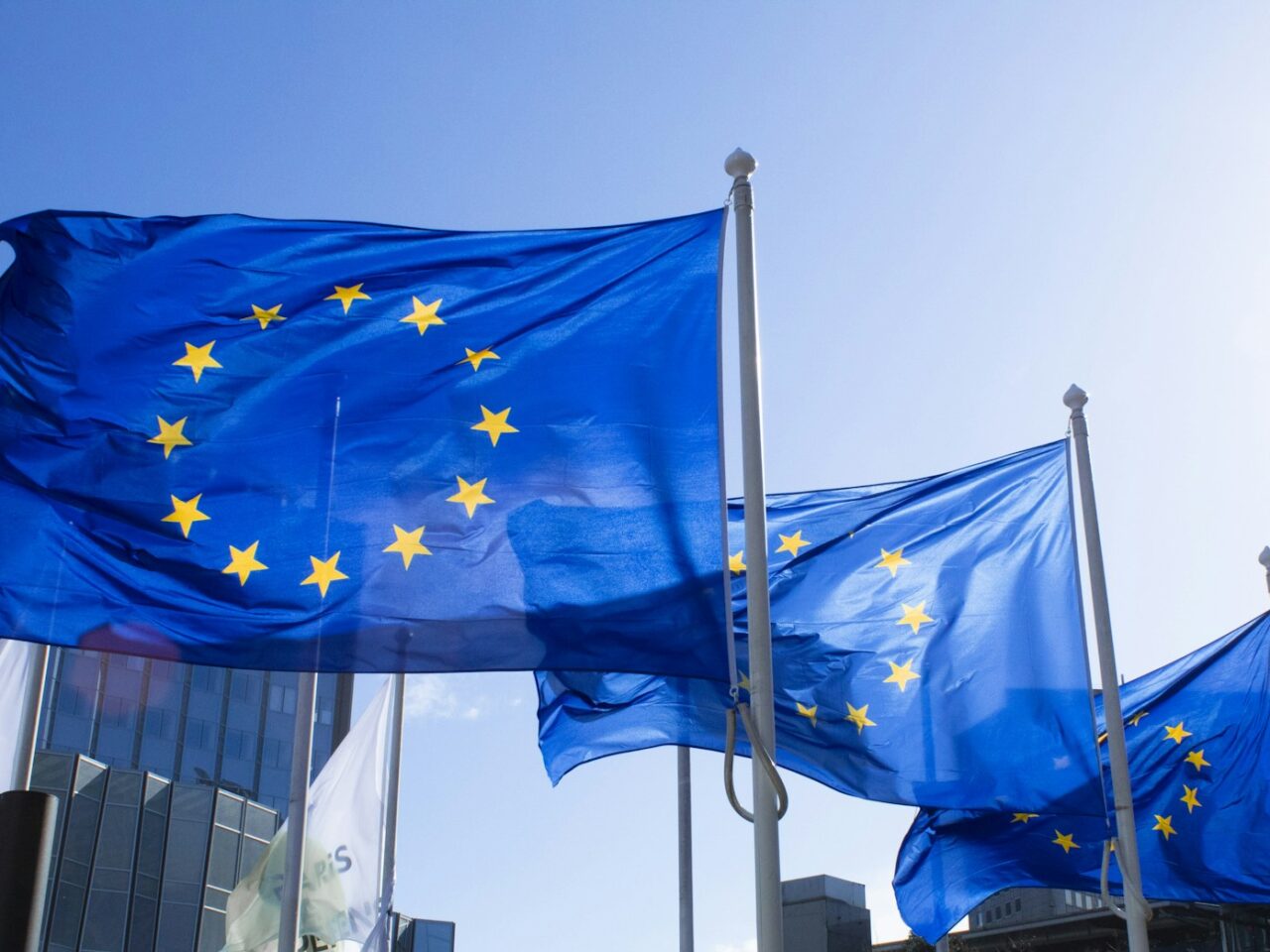
When Thierry Breton stepped down as European Commissioner in 2024, he left behind a legacy of ambition and vision for Europe’s technological future. Breton had pushed for digital sovereignty, stronger industrial and AI policies and a robust regulatory framework. Yet, the landscape he helped shape has evolved into something far more complex than any single individual could steer.
Read More
Wednesday, November 26, 2025

In the world of artificial intelligence, giants like NVIDIA dominate the conversation. Yet a European player is quietly making waves: Axelera AI, a Dutch startup focused on high-performance, energy-efficient AI chips. Often compared to NVIDIA — sometimes even by themselves — Axelera promises a striking advantage: up to a hundred times faster performance in specific applications, all while operating at a fraction of the scale and cost of large GPU makers.
Read More
Wednesday, November 26, 2025

Europe likes to present itself as the world’s digital rule-maker. From the AI Act to the Digital Markets Act, from data governance to platform accountability, the European Union has built the most expansive regulatory framework for the digital economy anywhere on earth. But behind the headlines and the political theatre lies a more complex question—one that is rarely asked, yet essential for understanding Europe’s technological trajectory. Who actually holds the power to shape Europe’s digital future?
Read More

 Available here:
