Saturday, December 6, 2025
Altair Media launched on 10 November 2025 with a clear mission: to analyse how artificial intelligence, deep-tech innovation and geopolitics shape Europe’s future. Not as a content platform, but as a research-driven, strategically oriented initiative that connects technology with governance, industry and society.
Read More
Saturday, December 6, 2025

Imagine the world of artificial intelligence as a grand theater production, where the curtain rises on three distinct acts. In the blinding spotlights of center stage stand the Magnificent Seven – a cadre of American tech titans whose combined market capitalization hit $20.8 trillion by late 2025, eclipsing the European Union’s entire GDP of $19.4 trillion. These companies – Apple, Amazon, Alphabet, Meta, Microsoft, Nvidia, and Tesla – don’t just perform; they rewrite the script, dictating the pace of innovation with a charisma that’s impossible to ignore.
Read More
Friday, December 5, 2025

Amazon Web Services has become more than a cloud provider; it is an invisible layer of global infrastructure that quietly determines where digital economies can grow. Nowhere is this more visible than in the geography of its datacenters. Dublin, Frankfurt, Stockholm, Singapore and Northern Virginia are not just strategic locations; they are geopolitical anchors in a world where data borders matter as much as physical ones. Each region has evolved into a gravitational center for AI companies, research institutions and cloud-native industries, pulling talent and investment toward the places where AWS capacity exists.
Read More
Thursday, December 4, 2025
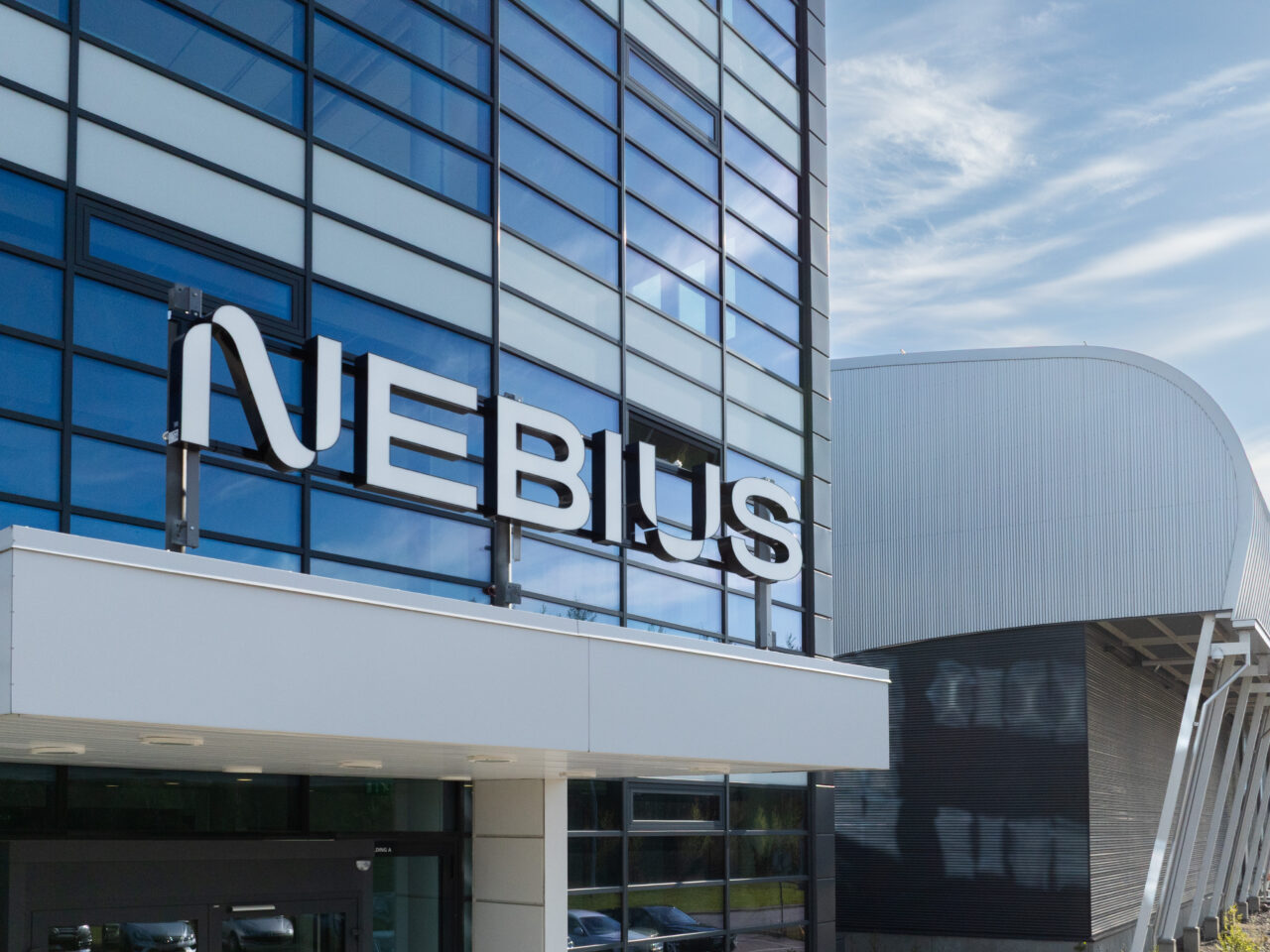
Nebius emerged quietly, almost unexpectedly, as one of Europe’s most strategic AI-infrastructure players. Its corporate home in Amsterdam–Schiphol Rijk gives it a European identity, but its operations stretch far beyond Dutch borders. Born from the international restructuring of Yandex in 2024, Nebius now positions itself as an independent global technology group, building cloud systems designed not for traditional enterprise workloads, but for intensive AI training and high-performance computing.
Read More
Wednesday, December 3, 2025

Europe’s ambition for safe, transparent and trustworthy AI is broadly supported. The EU AI Act reflects that vision, aiming to ensure that AI systems respect human rights, minimise risk and operate with clear accountability. Yet the way the regulation currently functions makes it feel less like a navigational tool and more like a weight dragging on the region’s innovation engine. Companies are not rebelling against the principles behind the Act; they are struggling with the extensive documentation, legal interpretation and procedural overhead that compliance now requires. The goal is quality, but the process too often creates hesitation and delay.
Read More
Wednesday, December 3, 2025

Poland is not always the first country mentioned when discussing Europe’s AI landscape. Yet beneath the surface, the country is building momentum with surprising speed. What started as scattered research initiatives has grown into a coordinated national strategy — supported by government funding, major infrastructure projects, expanding academic programs and a growing private-sector footprint.
Read More
Tuesday, December 2, 2025

Germany approaches deep technology not as a speculative frontier but as a long-term strategic layer that supports industrial resilience, technological sovereignty and the next era of algorithmic innovation. Quantum computing, neuromorphic chips and advanced materials are treated as foundational—technologies whose payoff may take years, but whose absence would leave Europe structurally dependent on foreign compute, platforms and intellectual property. Germany’s investments reflect this long view: build capacity now, secure autonomy later.
Read More
Tuesday, December 2, 2025

Germany’s AI ambitions are shaped as much by infrastructure as by research, industry or policy. Datacenters, energy supply and high-performance computing form the essential backbone for AI deployment, yet they also introduce constraints that influence where, how and how quickly AI capabilities can scale. Ambition alone cannot overcome the realities of electricity grids, cooling requirements and permitting processes.
Read More
Tuesday, December 2, 2025

Germany’s relationship with artificial intelligence is rarely framed as a software story; it is, fundamentally, an industrial one. While Silicon Valley speaks in models and scale, Germany speaks in production lines, logistics chains and quality assurance. The country’s economic engine—automotive clusters in Munich, precision machine builders in Baden-Württemberg and medtech research networks spanning Heidelberg to the Rhine Valley—has become the proving ground for AI integration in Europe.
Read More
Tuesday, December 2, 2025

For years, Germany has been described as Europe’s “industrial engine”, a country where engineering discipline meets long-term economic planning. As artificial intelligence accelerates globally, Germany finds itself at a crossroads: well-equipped with research depth, industrial muscle and public investment—but also challenged by the speed, capital intensity and platform dynamics that define the AI race. What emerges today is a nation trying to translate a century of industrial expertise into leadership within a technology wave dominated elsewhere by hyperscale software ecosystems.
Read More

 Available here:
