Tuesday, January 6, 2026

Europe’s energy landscape is at a crossroads. As wind and solar power inject unpredictability into the grid, one company is orchestrating a delicate balance between supply, demand and the digital revolution: Électricité de France (EDF). Far from being just a utility, EDF is emerging as the dual engine of European AI, simultaneously modernizing its own grid with artificial intelligence while powering the continent’s burgeoning AI ecosystem.
Read More
Tuesday, January 6, 2026

For decades, emergency services across Europe relied on narrowband radio systems built for one primary function: voice. These networks were resilient and trusted, but increasingly misaligned with the reality of modern crises. Emergencies today are data-rich, multi-agency and fast-moving. In 2025, France decisively acknowledged this shift — and Airbus played a central role in making it operational.
Read More
Tuesday, January 6, 2026

For decades, the role of a telecom operator was clearly defined. Build networks. Sell connectivity. Optimise reliability and scale. Innovation meant faster speeds, lower latency and broader coverage, while intelligence lived higher up the stack — in devices, platforms and applications owned by others. Deutsche Telekom is now dismantling that model using First Principles Thinking.
Read More
Monday, January 5, 2026

In discussions about Europe’s digital future, attention often gravitates toward regulation, artificial intelligence breakthroughs or geopolitical competition. Less visible, but equally influential, are the organisations that operate in the space between industry, institutions and long-term strategy. DIGITALEUROPE is one of those actors — not a technology company, not a political body, but a connective force shaping how Europe’s digital transformation is framed and governed.
Read More
Sunday, January 4, 2026

A short but pointed intervention by Rafael A. Junquera, Co-Founder and Editorial Director of TeleSemana.com, is drawing attention inside the global telecom industry. Writing in Spanish, Junquera frames the current evolution of 5G not as a technology upgrade, but as a strategic fork in the road that could shape power relations in telecommunications for decades.
Read More
Saturday, January 3, 2026

Europe rarely announces its strategic moves. When it does, they usually arrive wrapped in regulation, standards or carefully negotiated frameworks. Power is exercised indirectly, through architecture rather than proclamation. Nokia’s AnyCloud strategy fits squarely within that tradition. It is neither a manifesto nor a policy intervention, but an infrastructural choice with far-reaching consequences.
Read More
Friday, January 2, 2026
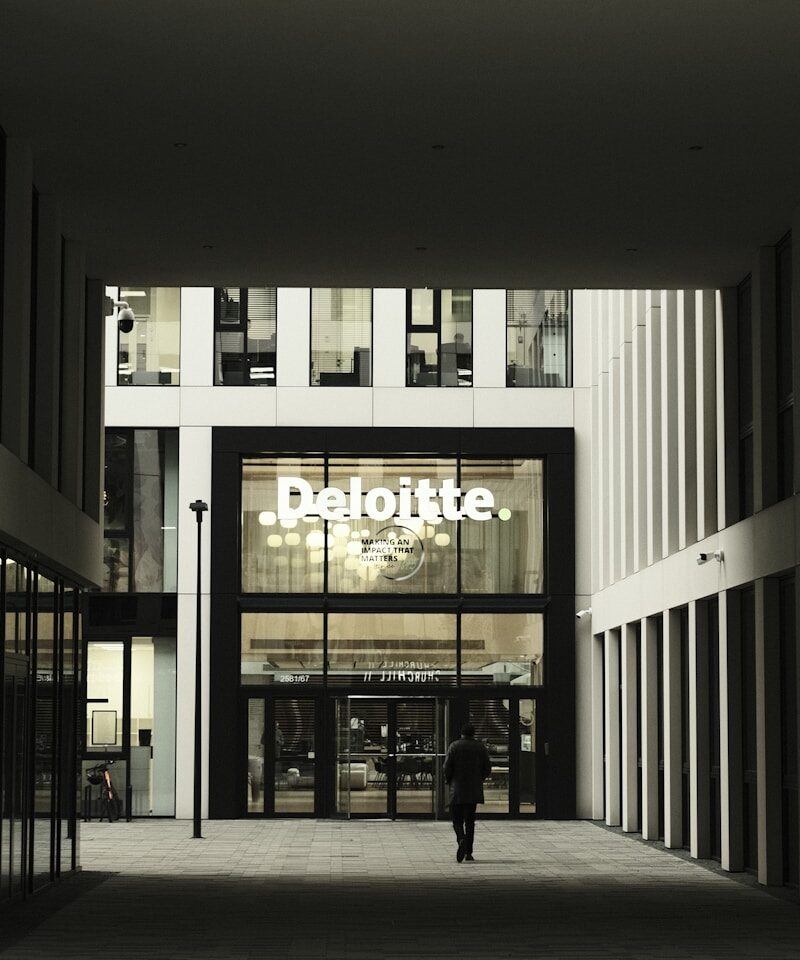
Artificial intelligence is often framed as a contest between platforms, startups and sovereign states. Public debate tends to revolve around models, chips and regulation. Yet beneath this visible layer lies a quieter infrastructure of influence: organisations that do not build AI themselves, but play a decisive role in how it is deployed, governed and ultimately normalised.
Read More
Monday, December 29, 2025

The Middle East is no longer just an oil region. Today, it is a laboratory for ambition, investment and strategic recalibration. Countries like Saudi Arabia, the United Arab Emirates, Qatar, Kuwait and Bahrain are racing to define their place in a world reshaped by artificial intelligence, technological innovation and the subtle currents of geopolitics.
Read More
Sunday, December 28, 2025

Semiconductors have become the fault line of modern geopolitics. The United States and China are investing aggressively in domestic chip production, treating semiconductors not as consumer goods but as strategic infrastructure. Europe, by contrast, spent decades optimising research while outsourcing large-scale manufacturing — until recent crises exposed how fragile that model had become.
Read More
Sunday, December 28, 2025

For decades, Silicon Valley defined the global technology narrative. Startups, venture capital and rapid software innovation drew the world’s attention. Today, a quieter but far more consequential shift is underway. A new configuration is emerging — a triangle connecting the Netherlands, Dallas–Fort Worth in Texas and Bengaluru in India — that is quietly defining the future of deep technology.
Read More

 Available here:
