Thursday, January 15, 2026

Orange, the former France Telecom, is taking a different path. While Telefónica in Spain pursues a sharp, almost surgical reduction in workforce to fund its AI ambitions, Orange seeks balance. The company aims to embrace AI without sacrificing the human element, positioning itself as Europe’s digital sentinel.
Read More
Thursday, January 15, 2026

Telefónica is a century old. Once, it embodied Spanish modernity in its most tangible form: cables, exchanges, uniforms, physical presence. Today, it is something else — or is attempting to become something else entirely. Less visible. More abstract. More algorithmic. The central question is no longer how Telefónica grows, but what it is becoming.
Read More
Thursday, January 15, 2026

For most European consumers, the transition from 4G to 5G has felt underwhelming. Video streams load just as fast, messages arrive instantly and smartphones look unchanged. Yet beneath this apparent continuity, mobile networks are undergoing their most profound transformation since their invention. What is changing is not speed, but function — and with it, who creates value, who controls infrastructure and who sets the rules.
Read More
Thursday, January 15, 2026

British Telecom sits at a fascinating — and risky — crossroads. While Deutsche Telekom has chosen to dominate the AI software stack with AI-Phones and proprietary clouds, BT has embraced a radically different path: industrial acceleration and the careful demolition of the past.
Read More
Wednesday, January 14, 2026

Europe has always expressed its values through infrastructure. Roman roads were not merely paths of stone; they were instruments of order and reach. Railways shaped the industrial nation-state. Broadcasting networks created mass culture and democratic publics. Infrastructure, in other words, has never been neutral. It is where political intent quietly hardens into daily reality.
Read More
Tuesday, January 13, 2026

For many, the European AI Act is a dense legal document — a framework of obligations, risk categories and compliance mechanisms designed to bring order to a rapidly evolving technological field. But this reading misses a deeper and more consequential layer. What if the AI Act is not merely a regulatory instrument, but a cultural statement?
Read More
Saturday, January 10, 2026

For more than a decade, artificial intelligence has been presented as a promise: smarter decisions, safer systems, better services. In recent months, however, AI has increasingly appeared in a different role — as a rationale for large-scale job cuts. Few announcements illustrate this tension more clearly than the recent restructuring at ABN AMRO.
Read More
Saturday, January 10, 2026

While the U.S. telecom market is dominated by scale-driven giants such as AT&T and Verizon—racing toward AI-native networks—the Netherlands tells a different, distinctly European story. Here, the transformation of telecom is less about sheer size and more about fiber depth, reliability and human-centered design.
Read More
Thursday, January 8, 2026

Quantum computing is often presented as a race between exotic physics concepts and dazzling promises of exponential speed-ups. In practice, however, the decisive question is far more down to earth: which technologies can actually be engineered, manufactured and maintained at scale?
Read More
Wednesday, January 7, 2026
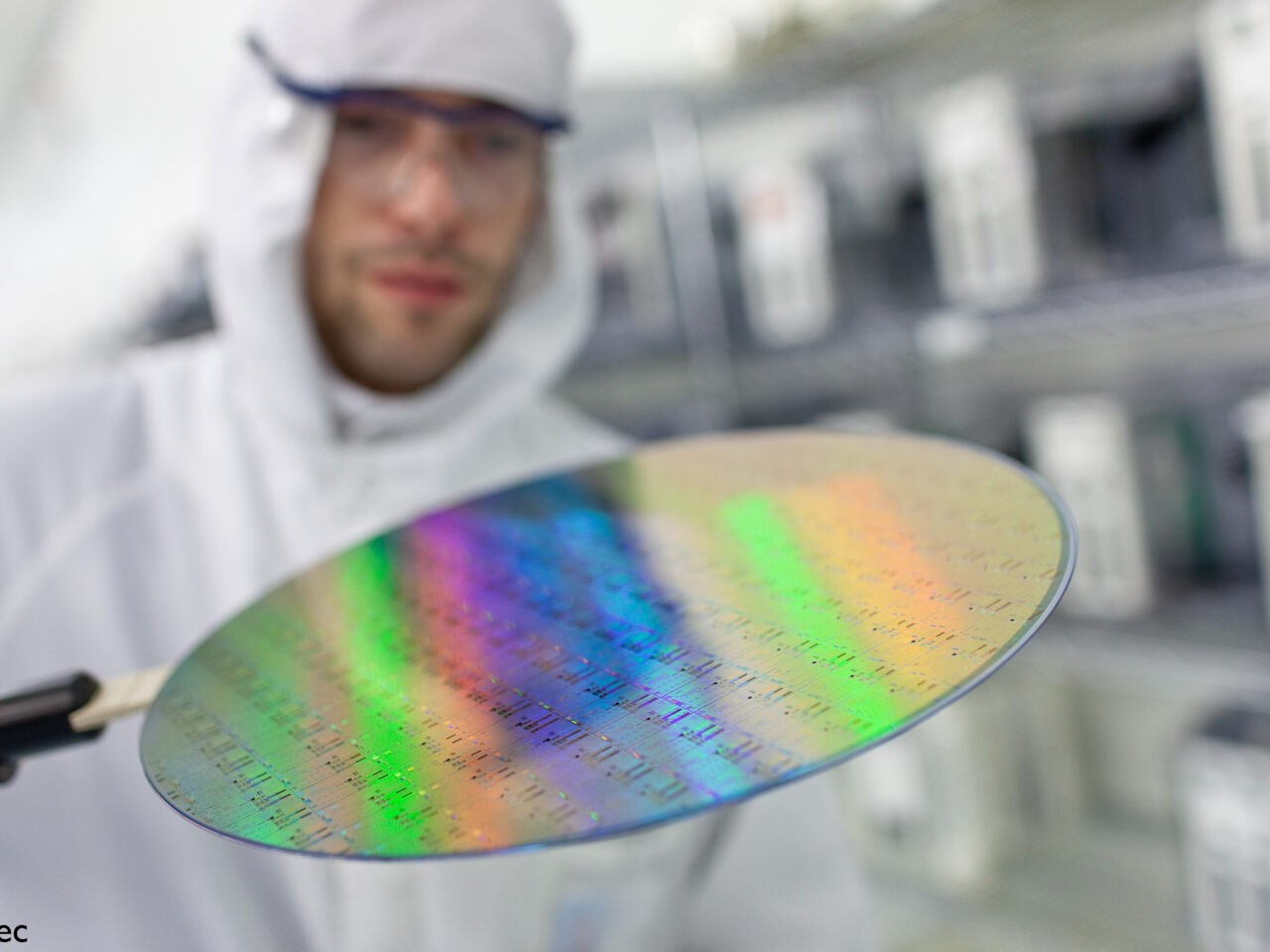
In global discussions about semiconductors, the focus tends to drift toward factories, supply chains and geopolitical leverage. Attention goes to where chips are manufactured, who controls production capacity and how nations secure access to critical technologies. Yet these debates often overlook a more fundamental question: where do future chip technologies actually originate?
Read More

 Available here:
