Thursday, December 25, 2025

Quantum computing is often presented as a technological race: who has the most qubits, the lowest error rates or the boldest scientific claims. That framing is misleading. The real story unfolding in 2025 is not about hardware benchmarks, but about how societies choose to organize technological power.
Read More
Monday, December 22, 2025

Artificial intelligence is often framed as a consumer-facing technology, driven by chatbots, platforms and foundation models. Yet some of the most consequential AI systems in Europe operate far from public view, embedded deep within the digital infrastructure that keeps societies connected. Ericsson stands at the centre of this invisible layer.
Read More
Friday, December 19, 2025
Whoever wants to understand artificial intelligence in Europe must first understand the cloud. And whoever understands the cloud will see why Europe’s focus on rules, governance and strategic positioning is not a brake on innovation, but a form of power.
Read More
Wednesday, December 17, 2025

Artificial intelligence is usually discussed in extremes. Policymakers focus on the macro level, debating global power, competition between the United States, China and Europe, and the broader strategic consequences of AI. At the other end, the public and businesses experience AI at the micro level, through products, automation and daily decision-making. But the meso layer — the physical and organizational infrastructure that makes AI possible — is often invisible in the conversation. And yet, it is precisely this middle layer that explains why AI debates frequently stall.
Read More
Sunday, December 14, 2025

Europe has long invested in systems like DigiD in the Netherlands to help citizens prove who they are online. Yet recent developments show how fragile this trust can be when identity and authentication systems are managed from outside Europe. Now, a French initiative called Authentica offers a new approach — a technology designed to verify the origin of digital creations, from music and images to text, while keeping control firmly in European hands.
Read More
Sunday, December 14, 2025

Nokia is reinventing itself — not by building AI models, but by creating the intelligent networks they depend on. From mobile phones to AI-driven infrastructure, its transformation reflects a broader European question: who controls the foundations of the digital future?
Read More
Friday, December 12, 2025

Nokia is one of those rare European companies whose history mirrors the broader story of industrial transformation. What began in the nineteenth century as a timber and paper business evolved into an industrial conglomerate, later became a global icon in mobile phones and now finds itself at yet another turning point. After losing the smartphone race to Apple and Google, Nokia did not disappear. Instead, it quietly began reinventing itself — and today that reinvention increasingly revolves around artificial intelligence.
Read More
Friday, December 12, 2025

Europe is entering a decisive moment. While the United States and China continue to dominate the global AI landscape, Europe is searching for a path that protects its values without sacrificing competitiveness or autonomy. The real question is no longer whether Europe should build its own AI model, but what kind of model is actually achievable — and how it can turn its structural strengths into strategic leverage.
Read More
Friday, December 5, 2025

Amazon Web Services has become more than a cloud provider; it is an invisible layer of global infrastructure that quietly determines where digital economies can grow. Nowhere is this more visible than in the geography of its datacenters. Dublin, Frankfurt, Stockholm, Singapore and Northern Virginia are not just strategic locations; they are geopolitical anchors in a world where data borders matter as much as physical ones. Each region has evolved into a gravitational center for AI companies, research institutions and cloud-native industries, pulling talent and investment toward the places where AWS capacity exists.
Read More
Thursday, December 4, 2025
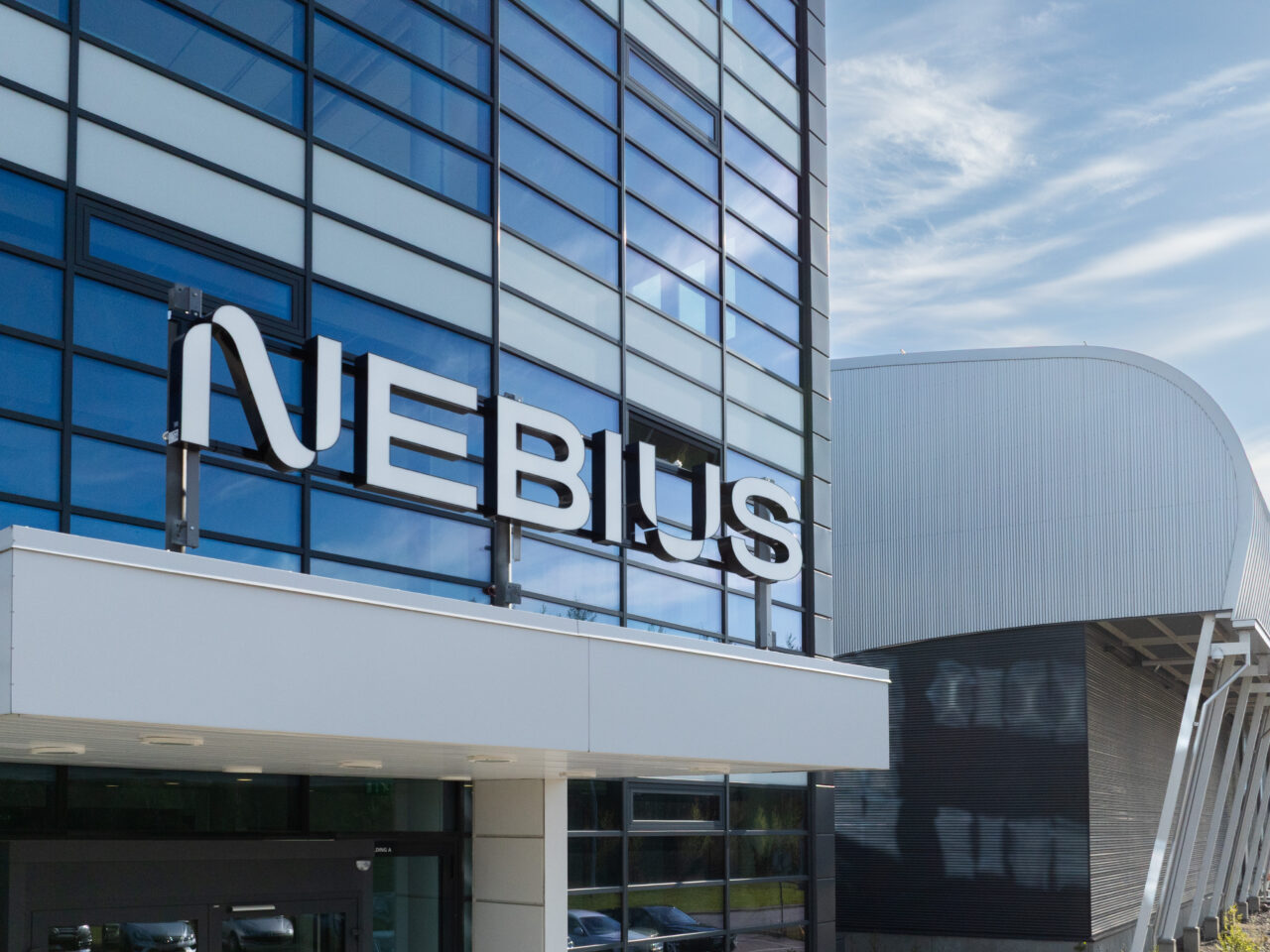
Nebius emerged quietly, almost unexpectedly, as one of Europe’s most strategic AI-infrastructure players. Its corporate home in Amsterdam–Schiphol Rijk gives it a European identity, but its operations stretch far beyond Dutch borders. Born from the international restructuring of Yandex in 2024, Nebius now positions itself as an independent global technology group, building cloud systems designed not for traditional enterprise workloads, but for intensive AI training and high-performance computing.
Read More

 Available here:
