Monday, March 2, 2026

At MWC 2026, the real story is not faster devices but control over the infrastructure that will shape economies, cities and security in the 2030s. As 6G moves from connectivity to sensing and AI integration, Europe faces a defining sovereignty test.
Read More
Sunday, March 1, 2026

At MWC 2026, telecom operators are repositioning themselves as the custodians of digital sovereignty. As AI, edge computing and geopolitical fragmentation reshape the technology landscape, control over networks — not apps — may determine who governs the infrastructure of the future digital society.
Read More
Saturday, February 21, 2026

As Brainport evolves from regional ecosystem to critical infrastructure, new questions emerge about power, legitimacy and social cohesion. When execution becomes identity, Europe must decide not only how to build faster — but what kind of society its industrial machine ultimately serves.
Read More
Thursday, February 19, 2026

Brainport’s technological frontier is accelerating, but its education architecture risks lagging behind. The Liquid Campus explores how learning must evolve from a linear pipeline into a dynamic ecosystem — where classrooms, cleanrooms and industry converge to sustain Europe’s innovation future.
Read More
Thursday, February 12, 2026

For most of the past three decades, each new generation of mobile technology followed a familiar Western script. Research was global, markets were competitive and standards were treated as neutral plumbing — slow, technical and largely apolitical. Power flowed from consumption: whoever deployed networks fastest and sold the most devices shaped the ecosystem.
Read More
Tuesday, February 10, 2026
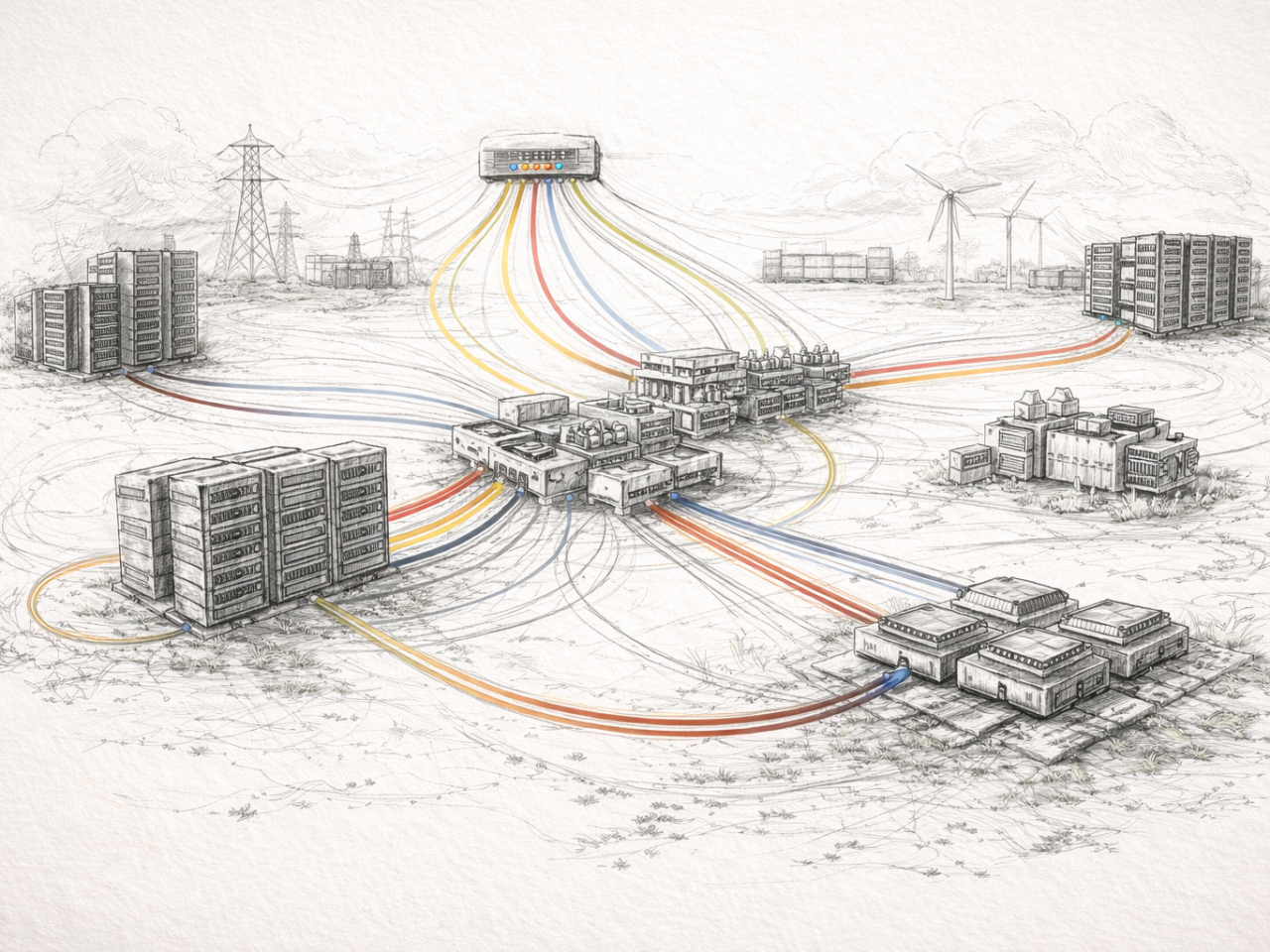
Modern data centers present themselves as the pinnacle of technological progress: dense racks, immense processing power and ever-growing capacity. Yet beneath this appearance of novelty lies a quieter truth. Most data centers today are not truly designed; they are inherited. Their structure reflects decades-old assumptions about how computation should be organised, scaled and cooled.
Read More
Sunday, January 18, 2026

For decades, Europe built its digital world from the ground up. Fibre followed roads. Mobile masts followed population density. Connectivity was something engineers could point at — tangible, terrestrial and geographically bounded. When networks failed, the causes were usually visible: a storm, a cut cable, a damaged site. That mental model is no longer sufficient.
Read More
Friday, January 16, 2026

While much of the public conversation around 6G still revolves around spectrum, speed and new antennas, a far more consequential shift is happening quietly beneath the surface. The real battle is no longer in the air interface, but inside the chip. And in that domain, one company plays a far more decisive role than is often acknowledged: Qualcomm.
Read More
Saturday, January 3, 2026

Europe rarely announces its strategic moves. When it does, they usually arrive wrapped in regulation, standards or carefully negotiated frameworks. Power is exercised indirectly, through architecture rather than proclamation. Nokia’s AnyCloud strategy fits squarely within that tradition. It is neither a manifesto nor a policy intervention, but an infrastructural choice with far-reaching consequences.
Read More
Friday, December 26, 2025

Artificial intelligence debates in Europe often revolve around regulation, sovereignty and the dominance of American platforms. Less visible, but no less consequential, is the role played by non-European industrial powers whose technologies are deeply embedded in Europe’s digital and economic fabric. Samsung is one of them.
Read More

 Available here:
