Spain’s Young Creators
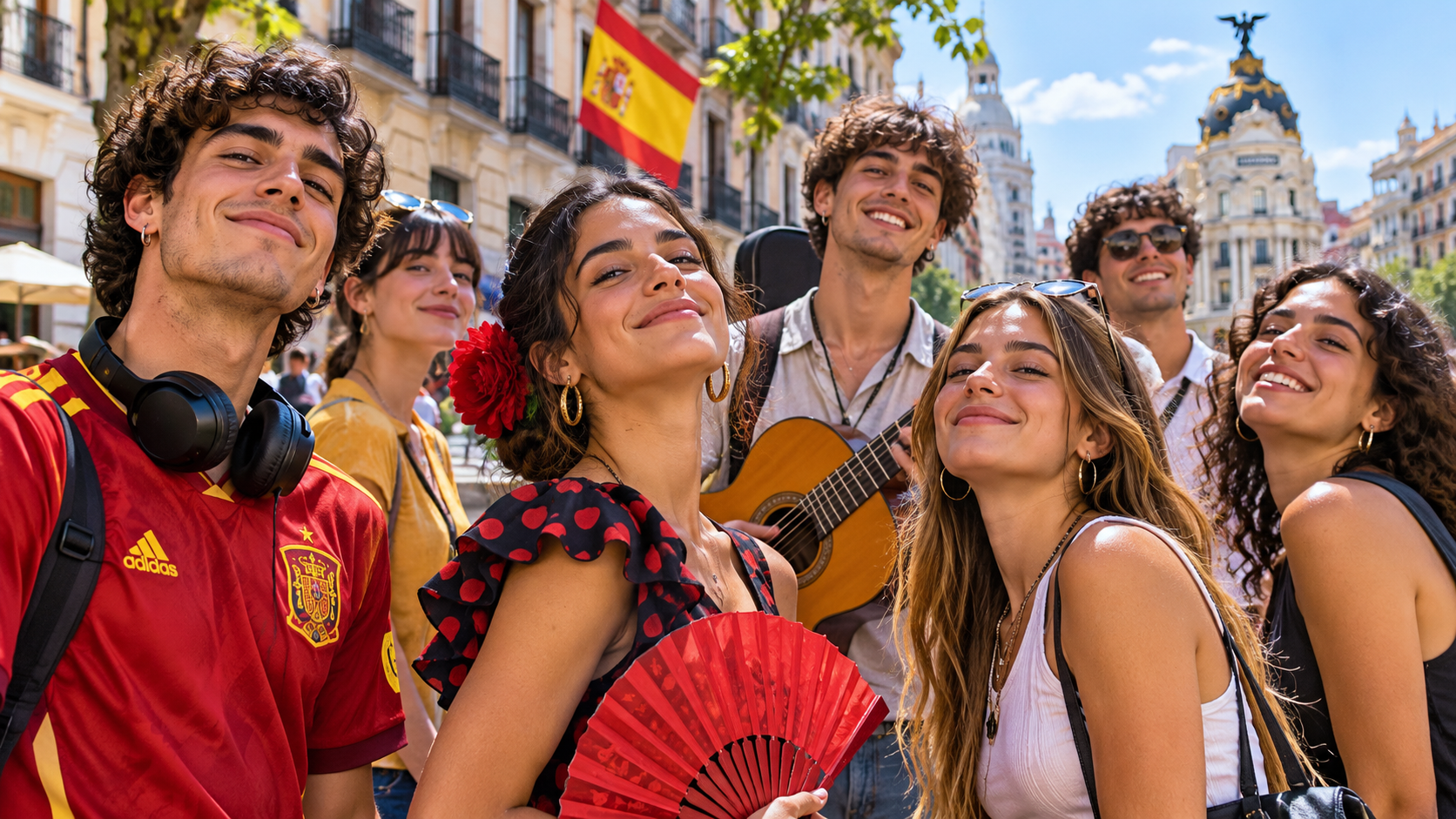
Culture Without Independence?
🎭 EUROPE’S CULTURAL GENERATION | PART ONE: SPAIN
Spain’s young people are enthusiastic cultural participants. From music festivals and cinema to theatre and local celebrations, creative expression is woven into everyday life. Yet behind this cultural vitality lies a difficult question: how freely can a new generation develop its creative ambitions when employment, housing and financial independence remain uncertain?
🟦 When does cultural participation become creative independence?
Spain’s cultural landscape is attracting considerable interest, particularly among younger audiences.
According to the Spanish Ministry of Culture’s 2024–2025 survey, 79.1% of young people aged 15–19 had visited a cinema during the previous year. Across the population aged 15 and over, 32.1% attended a contemporary music concert.
These figures demonstrate cultural engagement, but attending a performance is not the same as creating one. A vibrant audience can provide the foundation for a thriving creative sector. Turning enthusiasm into artistic work, however, requires opportunities, resources and financial security.
Spain has recognised the importance of cultural access through its Bono Cultural Joven. In 2026, eligible young people turning 18 could apply for €400 to spend on cultural products and activities, including certain resources for artistic creation.
The initiative encourages participation and introduces younger audiences to different cultural experiences. Yet access to culture is only one part of the challenge.
In September 2026, Spain’s youth unemployment rate stood at 22.8%, compared with the EU average of 15.5%. These figures refer to unemployed people under 25 as a percentage of the young labour force, not all young people.
Housing presents another obstacle. Eurostat estimates that Spaniards left their parental home at an average age of 30.2 years in 2025, compared with 26.3 years across the EU.
Living with parents does not necessarily prevent artistic development. Family support can provide the stability needed to study, rehearse or pursue creative ambitions. But not every young person has access to that support.
Consider the practical requirements of artistic independence. A young musician needs rehearsal space and equipment. An aspiring filmmaker needs production resources. A theatre performer needs training, venues and opportunities to develop professionally.
In cultural centres such as Madrid and Barcelona, these ambitions must compete with the wider costs of urban living. Beyond the major cities, access to creative networks, facilities and professional opportunities may be more limited.
Spain’s cultural challenge is therefore not simply to encourage young people to appreciate the arts. Many already do. It is to make the transition from cultural participation to independent creative activity more attainable.
That question extends well beyond Spain. Across Europe, young people share creative ambitions but encounter very different economic and social conditions.
The tension: Spain’s young generation demonstrates considerable cultural enthusiasm. But transforming that enthusiasm into artistic independence requires more than audiences and cultural opportunities. It also depends on the economic freedom to create, experiment and build a future.
About the Series
Europe’s Cultural Generation is a seven-part editorial series by Altair Media examining the relationship between youth, culture and opportunity across Spain, Greece, Bulgaria, Poland, Germany, Sweden and Norway. Each country offers a different perspective on how economic circumstances, social expectations and cultural traditions shape the lives of young Europeans. Drawing on European statistics, national research and cultural developments, the series looks beyond familiar stereotypes to explore both the opportunities and the barriers facing a new generation. Together, these seven portraits reveal a Europe rich in cultural diversity, but far from equal in the opportunities it offers young people to participate, create and build their future.
Research and sources
- Spanish Ministry of Culture — Survey of Cultural Habits and Practices, 2024–2025
- Spanish Ministry of Culture — Bono Cultural Joven 2026
- Eurostat — Youth Unemployment, September 2026
- Eurostat — When Do Young People Leave the Parental Home?, September 2026
Credit
AI-generated illustration | Altair Media
Caption
Spain’s young generation embraces music, friendship and creative expression. Yet behind this cultural vitality lies a deeper question: do young people have the economic freedom to turn their creative ambitions into independent futures?
