
Deutsche Telekom underpins Europe’s connectivity, but control is shifting upward. As cloud and platforms capture value, the question is whether scale in networks still translates into power—or whether the backbone risks becoming a utility in someone else’s system.
The Operators of Power

Who controls the networks, the cloud and the flow of data in Europe
Phase II shifts the focus from systems to the companies that operate Europe’s digital infrastructure and shape how power flows.
Following The System Before 6G, we now turn to the actors behind the architecture. Telecom operators, system players and global platforms do not just run infrastructure—they define control, influence and sovereignty across the network, the cloud and the data that moves between them.

Orange represents Europe’s most explicit attempt at telecom sovereignty. But as power shifts beyond networks to cloud and platforms, the question is whether a state-aligned operator can truly control the system—or remain confined to a single layer.

Telefónica spans continents, but scale comes with exposure. As value shifts to cloud and platforms, its transatlantic reach raises a critical question: does geography create power—or does it dilute control in an increasingly concentrated digital system?

BT operates inside Europe’s digital system but outside its political core. As standards and control shift upward, its position raises a critical question: can a company shape infrastructure while remaining a rule-taker in the system it sustains?
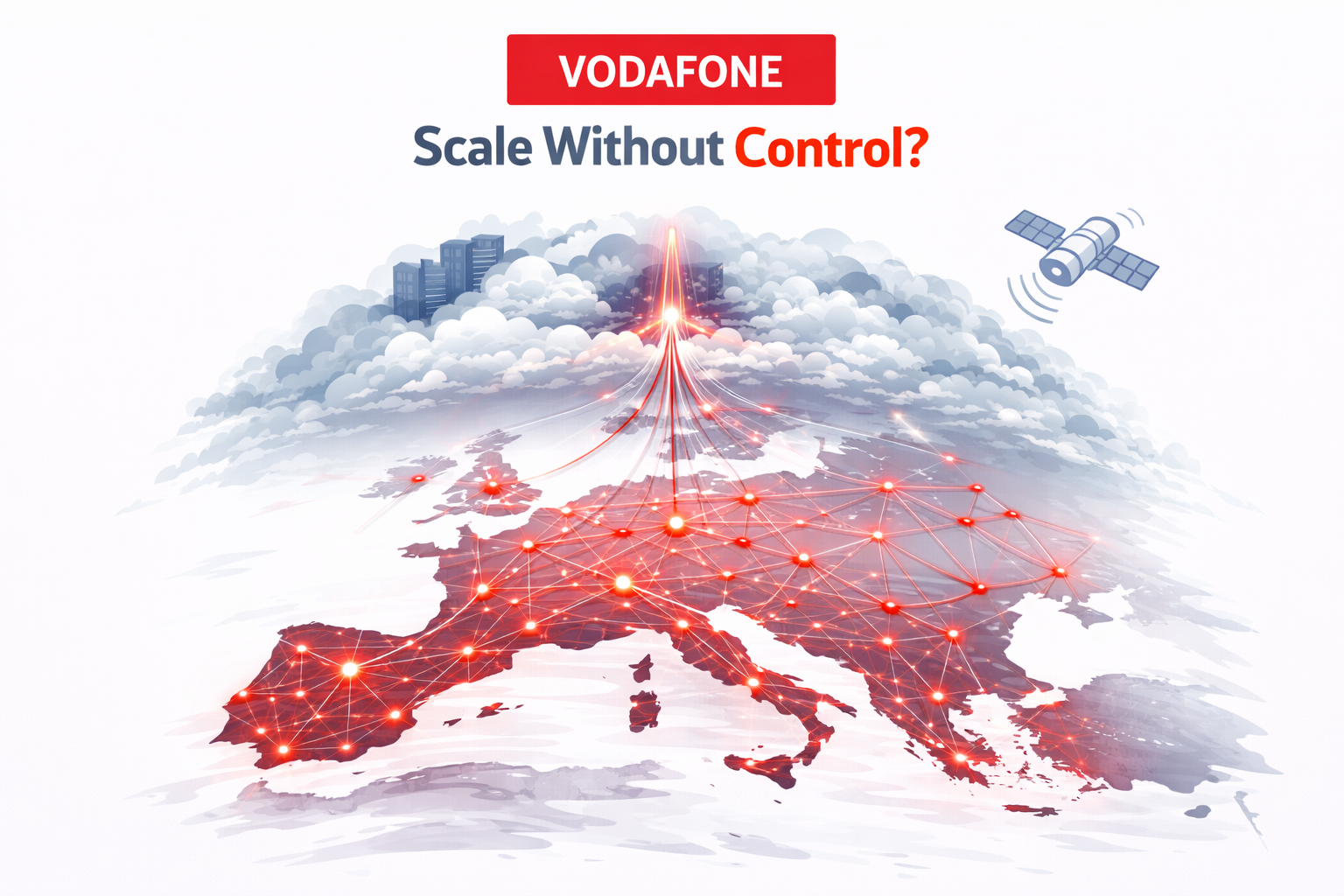
Vodafone spans markets across Europe, but scale creates exposure rather than control. As power shifts to cloud and platforms, its broad footprint raises a critical question: can a company without a clear center ever shape the system it connects?

TIM reveals the hidden struggle beneath Europe’s digital infrastructure. As debt, private equity and national interests collide, control over networks becomes fluid—raising a deeper question: who owns sovereignty when infrastructure itself is in play?

Nokia does not operate Europe’s networks—but helps design them. As telecom shifts toward software, standards and 6G architecture, its role becomes strategic. The question is whether design influence can translate into control in a system defined above the network.

Ericsson defines how networks function—through standards, patents and the physics of connectivity. But as power shifts toward cloud and orchestration, the question is whether control at this foundational layer can translate into influence across the system.

Microsoft does not own Europe’s networks—but increasingly shapes how they operate. As telecom shifts toward software and cloud-based infrastructure, control moves from hardware to platforms, raising a critical question: who governs the system behind the network?

Amazon has built a form of infrastructure that operates beyond borders, decoupling geography from control. As Europe’s economy increasingly depends on this layer, the question is no longer where data resides—but where the system itself is governed.
