Saturday, January 17, 2026

When global debates turn to artificial intelligence, geopolitics and innovation, attention usually flows toward large countries, powerful institutions and well-funded research ecosystems. Greenland rarely features in these conversations — despite sitting at the literal and strategic edge of some of the most consequential transformations of the 21st century.
Read More
Sunday, December 21, 2025

Artificial intelligence has quietly become one of the most loaded words in European education. Not because of what it can do, but because of why institutions increasingly want to use it. Across Europe — and notably in the Netherlands — higher education institutions are facing financial pressure. Budget cuts, rising costs and structural reforms are pushing boards to look for efficiency gains. In that context, AI is often framed as an obvious solution. Faster processes. Fewer people. Lower costs. That framing is understandable — and fundamentally flawed.
Read More
Tuesday, December 16, 2025

Salesforce’s introduction of Agentforce 360 marks a new phase in the evolution of artificial intelligence inside organisations. Rather than positioning AI as a standalone automation layer, the concept of the “Agentic Enterprise” frames AI agents as collaborators: systems designed to support employees in decision-making, coordination and execution. While this approach is technologically ambitious, its European rollout reveals challenges that go far beyond software adoption.
Read More
Monday, December 8, 2025

The global race for artificial intelligence (AI) has often been framed as a competition between the United States and China. But quietly, Europe is staking its own claim. The continent does not want to rely on foreign AI systems, whose code and decision-making remain opaque. Europe’s goal is clear: AI that is powerful, transparent and built to European standards.
Read More
Saturday, December 6, 2025

Central Europe is quietly awakening to artificial intelligence. Hungary, Slovakia and Czechia each have national strategies, growing startup ecosystems and university research programs, yet face structural and financial challenges. By 2030, three broad scenarios could emerge, shaping not only their domestic AI landscapes but also their role in Europe.
Read More
Friday, December 5, 2025

Yesterday Geoffrey Hinton, the man who taught machines to dream, gave his verdict: Google will win the AI race. Not maybe. Not probably. Will.
Read More
Tuesday, December 2, 2025
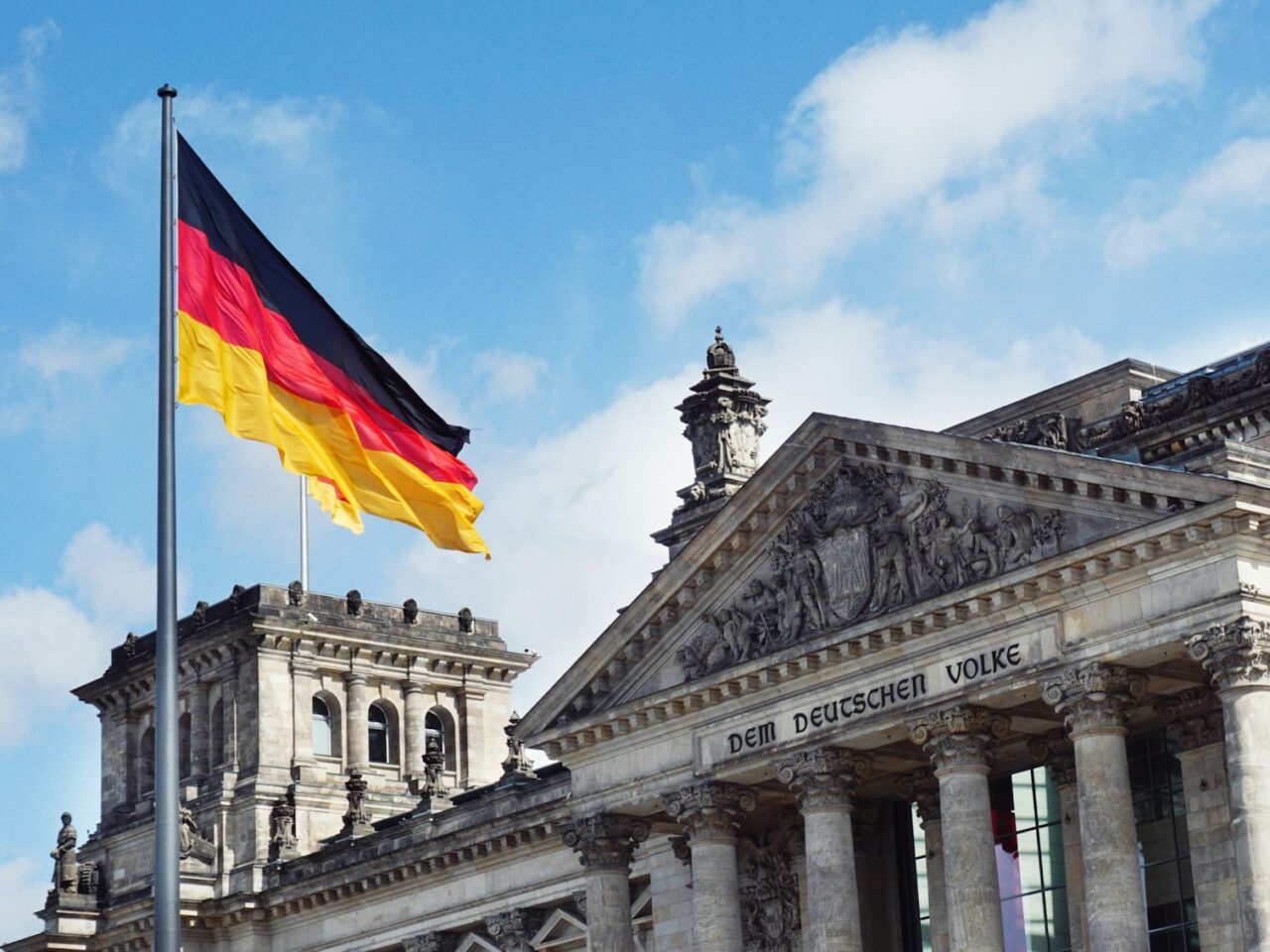
Germany is entering the AI era on its own terms—shaped not by big-tech platforms, but by engineering culture, industrial depth and a deliberate push for strategic autonomy. The country does not dominate global AI headlines, nor does it race to build frontier models. Instead, it is constructing something Europe may find far more valuable: an AI-enabled industrial backbone capable of delivering resilience in a decade defined by supply chains, energy shocks and geopolitical tension.
Read More
Tuesday, December 2, 2025

Germany’s AI ambitions are shaped as much by infrastructure as by research, industry or policy. Datacenters, energy supply and high-performance computing form the essential backbone for AI deployment, yet they also introduce constraints that influence where, how and how quickly AI capabilities can scale. Ambition alone cannot overcome the realities of electricity grids, cooling requirements and permitting processes.
Read More
Tuesday, December 2, 2025

Germany’s relationship with artificial intelligence is rarely framed as a software story; it is, fundamentally, an industrial one. While Silicon Valley speaks in models and scale, Germany speaks in production lines, logistics chains and quality assurance. The country’s economic engine—automotive clusters in Munich, precision machine builders in Baden-Württemberg and medtech research networks spanning Heidelberg to the Rhine Valley—has become the proving ground for AI integration in Europe.
Read More

 Available here: