
Switzerland’s Olympic bid raises a question that extends far beyond sport: can an entire country function as a platform for coordination, shared identity and distributed governance?
Hosting Complexity

How Nations Organise Identity, Infrastructure and Collective Ambition
Large-scale events reveal more than organisational capability. They expose how societies coordinate institutions, distribute responsibility and transform identity into shared projects with global visibility.
Hosting Complexity explores how countries use major events, cultural initiatives and collective projects to express deeper models of governance, belonging and territorial organisation. Rather than examining events themselves, the series investigates the institutional architectures that make them possible and the societal values they reflect.
Possible themes include Switzerland 2038, Olympic legacies, decentralised governance, sustainability, public-private partnerships, regional identity and the future of collective organisation in an increasingly fragmented world.
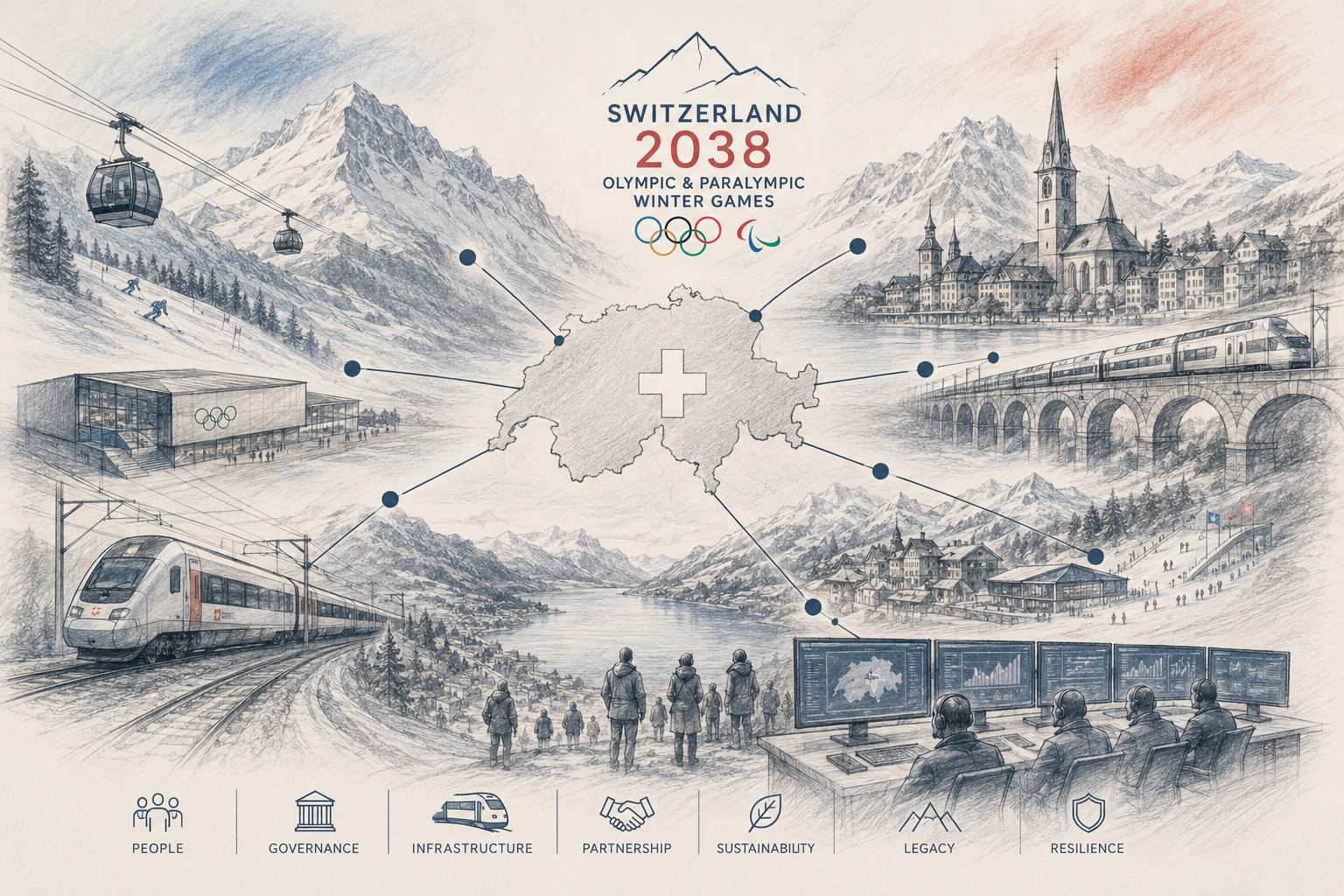
Switzerland’s proposal for the 2038 Winter Olympics is more than a sporting vision. It offers a compelling case study in how modern democracies coordinate infrastructure, governance and public trust—and why institutional capacity may become Europe’s most valuable strategic advantage in an increasingly complex world.
Credit
Illustration by Altair Media / AI-assisted visual interpretation (2026).
Caption
Switzerland 2038 reimagines the Winter Olympics as a national endeavour rather than an urban spectacle. Existing infrastructure, decentralised governance and shared responsibility together suggest a different model for organising complexity.
