Sunday, January 18, 2026

For decades, Europe built its digital world from the ground up. Fibre followed roads. Mobile masts followed population density. Connectivity was something engineers could point at — tangible, terrestrial and geographically bounded. When networks failed, the causes were usually visible: a storm, a cut cable, a damaged site. That mental model is no longer sufficient.
Read More
Friday, January 16, 2026

While much of the public conversation around 6G still revolves around spectrum, speed and new antennas, a far more consequential shift is happening quietly beneath the surface. The real battle is no longer in the air interface, but inside the chip. And in that domain, one company plays a far more decisive role than is often acknowledged: Qualcomm.
Read More
Friday, January 16, 2026

Europe’s next digital backbone is not emerging from a single campus or corporate headquarters. It is taking shape through a distributed network of laboratories, researchers and industrial partners — and one of its most important nodes lies in Portugal. From Lisbon to Aveiro, the Instituto de Telecomunicações (IT) has become a quiet but decisive force in how Europe approaches artificial intelligence, next-generation networks and digital trust.
Read More
Thursday, January 15, 2026

Telefónica is a century old. Once, it embodied Spanish modernity in its most tangible form: cables, exchanges, uniforms, physical presence. Today, it is something else — or is attempting to become something else entirely. Less visible. More abstract. More algorithmic. The central question is no longer how Telefónica grows, but what it is becoming.
Read More
Thursday, January 15, 2026
There is no excerpt because this is a protected post.
Read More
Tuesday, January 13, 2026
There is no excerpt because this is a protected post.
Read More
Thursday, January 8, 2026

Quantum computing is often presented as a race between exotic physics concepts and dazzling promises of exponential speed-ups. In practice, however, the decisive question is far more down to earth: which technologies can actually be engineered, manufactured and maintained at scale?
Read More
Thursday, January 8, 2026

For years, the evolution of mobile networks followed a familiar logic: faster radios, denser cells, smarter cores. Each generation promised better performance, greater efficiency and new services. Artificial intelligence, at first glance, appears to be the next step in that same lineage — another tool to optimise an already complex system.
Read More
Wednesday, January 7, 2026
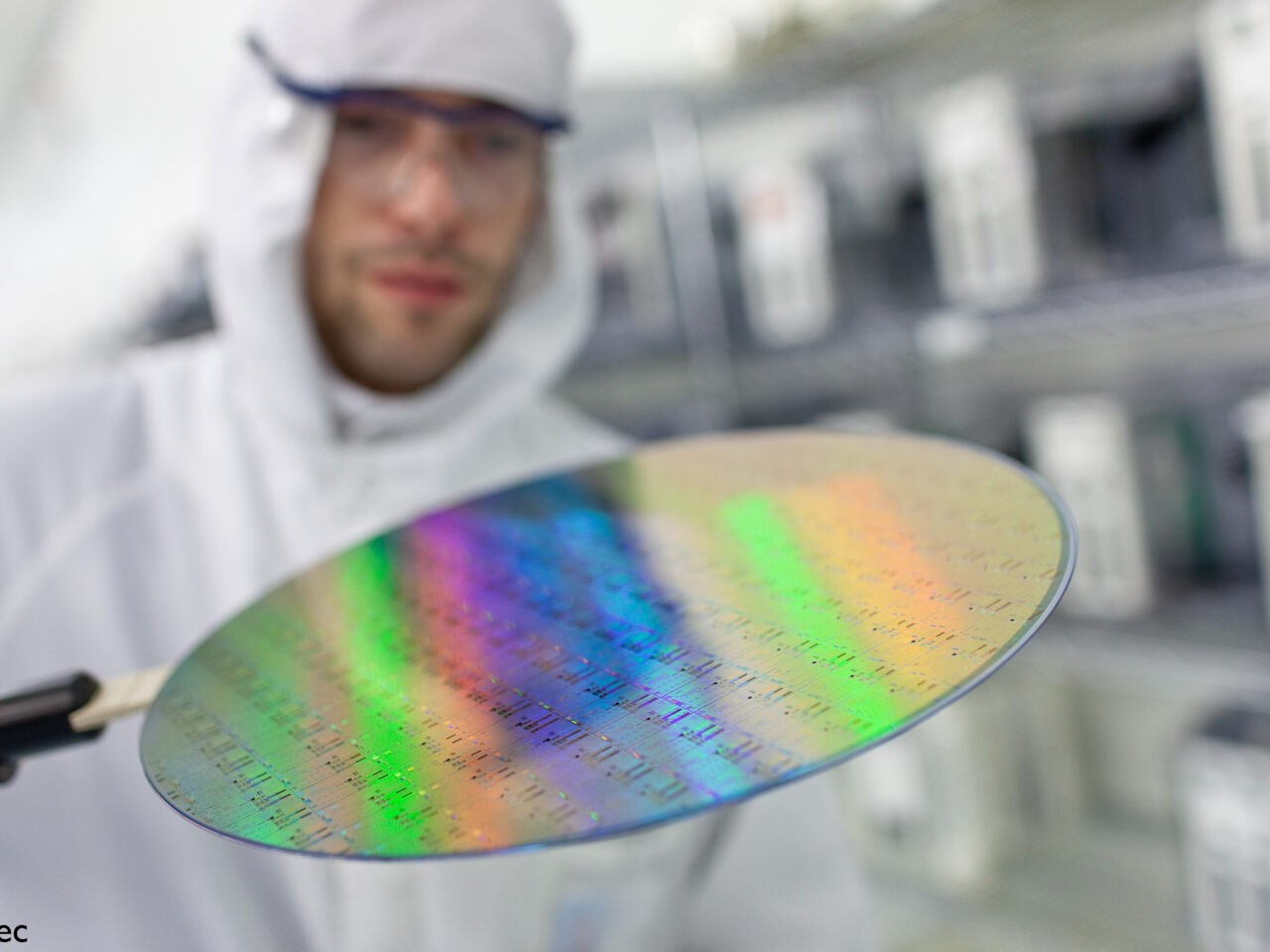
In global discussions about semiconductors, the focus tends to drift toward factories, supply chains and geopolitical leverage. Attention goes to where chips are manufactured, who controls production capacity and how nations secure access to critical technologies. Yet these debates often overlook a more fundamental question: where do future chip technologies actually originate?
Read More
Monday, January 5, 2026

In discussions about Europe’s digital future, attention often gravitates toward regulation, artificial intelligence breakthroughs or geopolitical competition. Less visible, but equally influential, are the organisations that operate in the space between industry, institutions and long-term strategy. DIGITALEUROPE is one of those actors — not a technology company, not a political body, but a connective force shaping how Europe’s digital transformation is framed and governed.
Read More

 Available here:
