Thursday, September 3, 2026

Europe has the savings and the industrial ambition. What it still lacks is the architecture connecting banks, public institutions and institutional capital to investable projects across technology, energy, agrifood, health and advanced manufacturing.
Read More
Thursday, August 27, 2026

Europe is beginning to build the funds its scale-ups need. But growth capital is only a bridge. Without sufficient liquidity, specialist investors and a credible European exit market, its most successful technology companies may still gravitate towards New York.
Read More
Thursday, August 27, 2026

Jean-Christophe Laloux’s appointment may signal a new phase for the European Investment Fund: moving beyond filling individual financing gaps towards creating the structures, incentives and partnerships through which private capital becomes willing to carry European strategic risk.
Read More
Wednesday, August 19, 2026
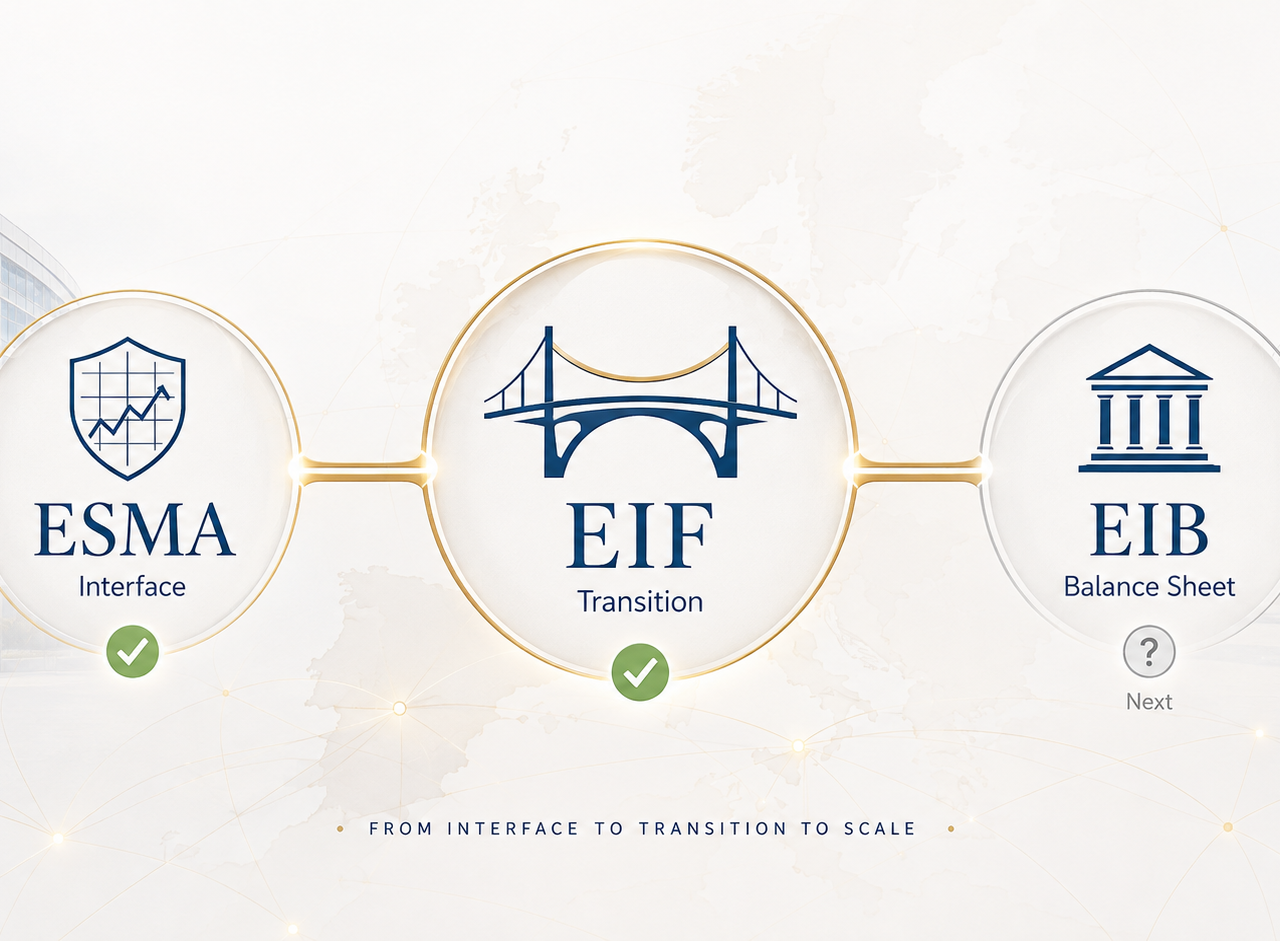
The European Investment Fund rarely chooses individual winners. Its deeper role is to share risk, anchor investment vehicles and strengthen the transition from innovation to investability — helping private capital move where markets are not yet ready to move alone.
Read More
Monday, August 17, 2026

Helsing shows that Europe can build defence technology to global scale. The harder question is what happens next: whether Europe can develop the capital, industrial partnerships and market architecture needed to make companies like Helsing less exceptional.
Read More
Friday, August 14, 2026

Europe says it needs hundreds of billions to finance its future. Yet Norway’s sovereign wealth fund alone manages more than €2 trillion. The real constraint may not be capital, but Europe’s architecture for turning savings into scale.
Read More
Wednesday, July 15, 2026

Despite sharing a common currency, Europe’s capital markets remain fragmented across national legal and financial systems. This essay explores why the Capital Markets Union seeks to bridge those divisions—and why deeper financial integration has become essential for Europe’s future competitiveness.
Read More
Tuesday, July 14, 2026

Europe has built a single market and a common currency, yet its capital remains fragmented. This opening essay explores why the Capital Markets Union has become a strategic priority—and why financial markets are increasingly part of Europe’s critical infrastructure.
Read More
Tuesday, July 14, 2026

Europe has a common currency, yet its capital markets remain fragmented. This series explores the stock exchanges, financial infrastructure and institutions shaping investment, innovation and long-term ownership—and why a stronger Capital Markets Union has become central to Europe’s economic future.
Read More
Monday, July 13, 2026

As payments become increasingly digital, Europe faces a fundamental question. How can citizens continue to access public money in an economy increasingly shaped by private platforms? The Digital Euro is ultimately less about technology than about preserving institutional trust.
Read More

 Available here: