Saturday, December 6, 2025

The Magnificent Seven own the sky. Europe writes the rules everyone else ends up copying. China quietly pays the bills and pulls the strings. In 2025 the future economy is decided: America deregulates, Europe regulates, China integrates. Trust is Europe’s only real product; time to start selling it before the heroes and the shadow take everything.
Read More
Saturday, December 6, 2025

Imagine the world of artificial intelligence as a grand theater production, where the curtain rises on three distinct acts. In the blinding spotlights of center stage stand the Magnificent Seven – a cadre of American tech titans whose combined market capitalization hit $20.8 trillion by late 2025, eclipsing the European Union’s entire GDP of $19.4 trillion. These companies – Apple, Amazon, Alphabet, Meta, Microsoft, Nvidia, and Tesla – don’t just perform; they rewrite the script, dictating the pace of innovation with a charisma that’s impossible to ignore.
Read More
Friday, December 5, 2025

Yesterday Geoffrey Hinton, the man who taught machines to dream, gave his verdict: Google will win the AI race. Not maybe. Not probably. Will.
Read More
Friday, December 5, 2025

Amazon Web Services has become more than a cloud provider; it is an invisible layer of global infrastructure that quietly determines where digital economies can grow. Nowhere is this more visible than in the geography of its datacenters. Dublin, Frankfurt, Stockholm, Singapore and Northern Virginia are not just strategic locations; they are geopolitical anchors in a world where data borders matter as much as physical ones. Each region has evolved into a gravitational center for AI companies, research institutions and cloud-native industries, pulling talent and investment toward the places where AWS capacity exists.
Read More
Thursday, December 4, 2025
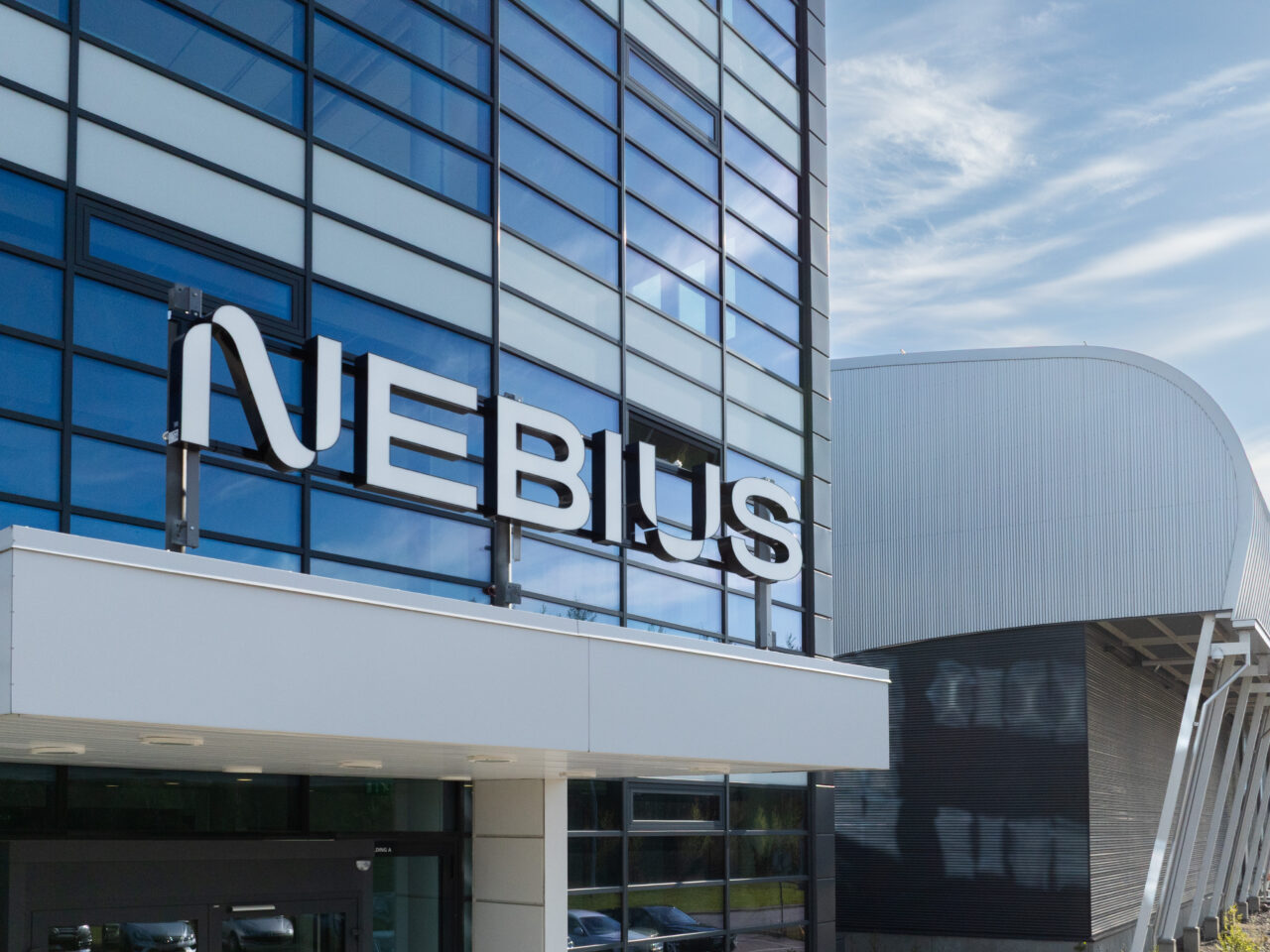
Nebius emerged quietly, almost unexpectedly, as one of Europe’s most strategic AI-infrastructure players. Its corporate home in Amsterdam–Schiphol Rijk gives it a European identity, but its operations stretch far beyond Dutch borders. Born from the international restructuring of Yandex in 2024, Nebius now positions itself as an independent global technology group, building cloud systems designed not for traditional enterprise workloads, but for intensive AI training and high-performance computing.
Read More
Wednesday, December 3, 2025

Europe’s ambition for safe, transparent and trustworthy AI is broadly supported. The EU AI Act reflects that vision, aiming to ensure that AI systems respect human rights, minimise risk and operate with clear accountability. Yet the way the regulation currently functions makes it feel less like a navigational tool and more like a weight dragging on the region’s innovation engine. Companies are not rebelling against the principles behind the Act; they are struggling with the extensive documentation, legal interpretation and procedural overhead that compliance now requires. The goal is quality, but the process too often creates hesitation and delay.
Read More
Wednesday, December 3, 2025

Poland is not always the first country mentioned when discussing Europe’s AI landscape. Yet beneath the surface, the country is building momentum with surprising speed. What started as scattered research initiatives has grown into a coordinated national strategy — supported by government funding, major infrastructure projects, expanding academic programs and a growing private-sector footprint.
Read More
Wednesday, December 3, 2025

AI is often discussed as a technology story, a policy headache or a race between continents. But if you step back, the most useful way to understand its trajectory is surprisingly traditional: the macro–meso–micro framework that economists have used for decades. It turns out to be an elegant map for a technology that is reshaping value creation from the planetary level down to individual workflows.
Read More
Tuesday, December 2, 2025
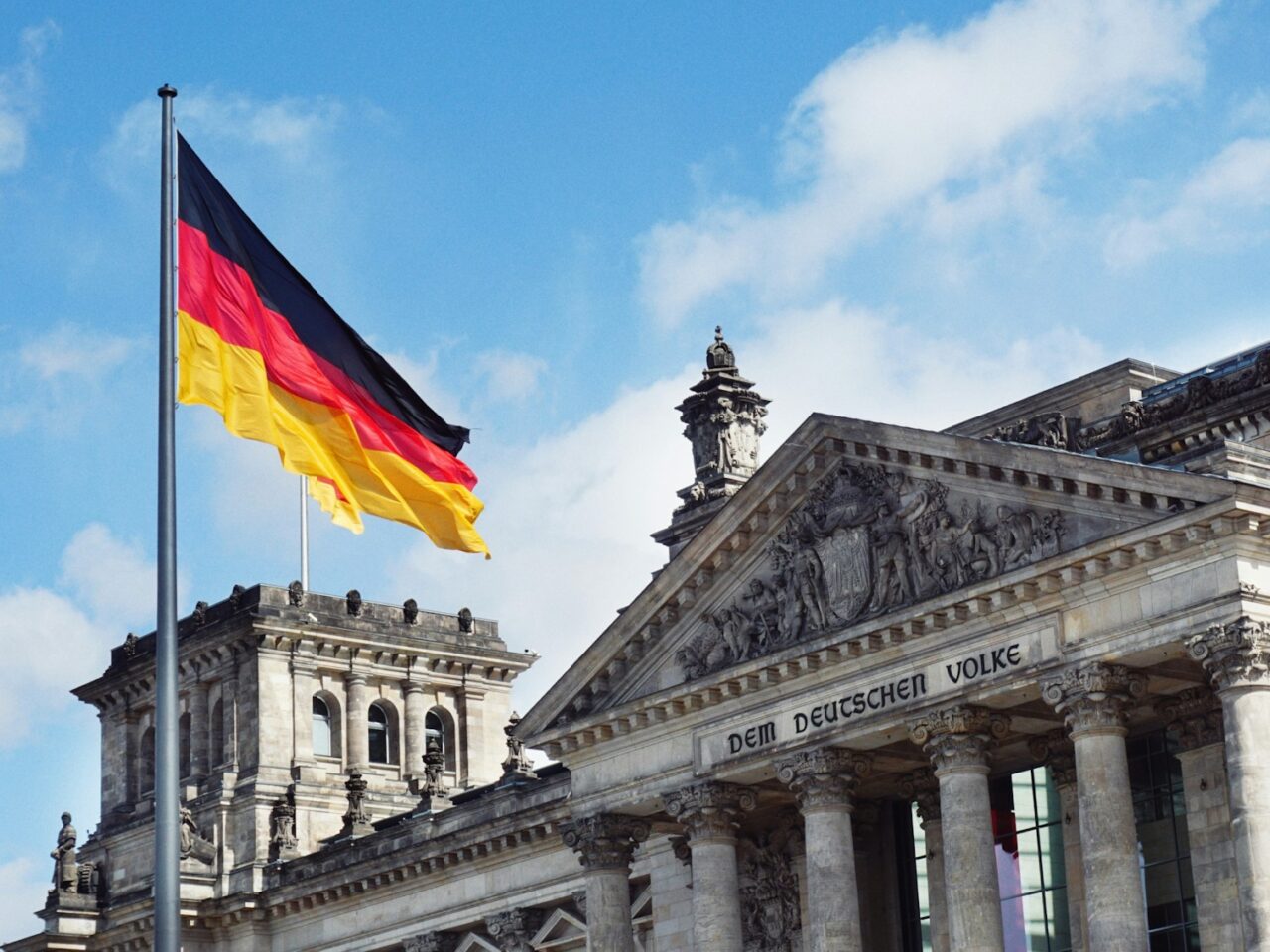
Germany is entering the AI era on its own terms—shaped not by big-tech platforms, but by engineering culture, industrial depth and a deliberate push for strategic autonomy. The country does not dominate global AI headlines, nor does it race to build frontier models. Instead, it is constructing something Europe may find far more valuable: an AI-enabled industrial backbone capable of delivering resilience in a decade defined by supply chains, energy shocks and geopolitical tension.
Read More
Tuesday, December 2, 2025

Germany approaches deep technology not as a speculative frontier but as a long-term strategic layer that supports industrial resilience, technological sovereignty and the next era of algorithmic innovation. Quantum computing, neuromorphic chips and advanced materials are treated as foundational—technologies whose payoff may take years, but whose absence would leave Europe structurally dependent on foreign compute, platforms and intellectual property. Germany’s investments reflect this long view: build capacity now, secure autonomy later.
Read More

 Available here:
