Tuesday, February 10, 2026

In the corridors of Brussels and the financial districts of Frankfurt and Paris, Europe’s Savings and Investment Union is still widely treated as a file for specialists. The debate revolves around insolvency law, supervisory frameworks, prospectus rules and fiscal harmonisation. It sounds manageable, technical — almost neutral.
Read More
Tuesday, February 10, 2026

As Europe’s political leadership fragments, the ECB has become the last institution still capable of long-term system thinking. In this essay, Christine Lagarde emerges not as a technocrat, but as Europe’s reluctant strategic conscience.
Read More
Tuesday, February 10, 2026
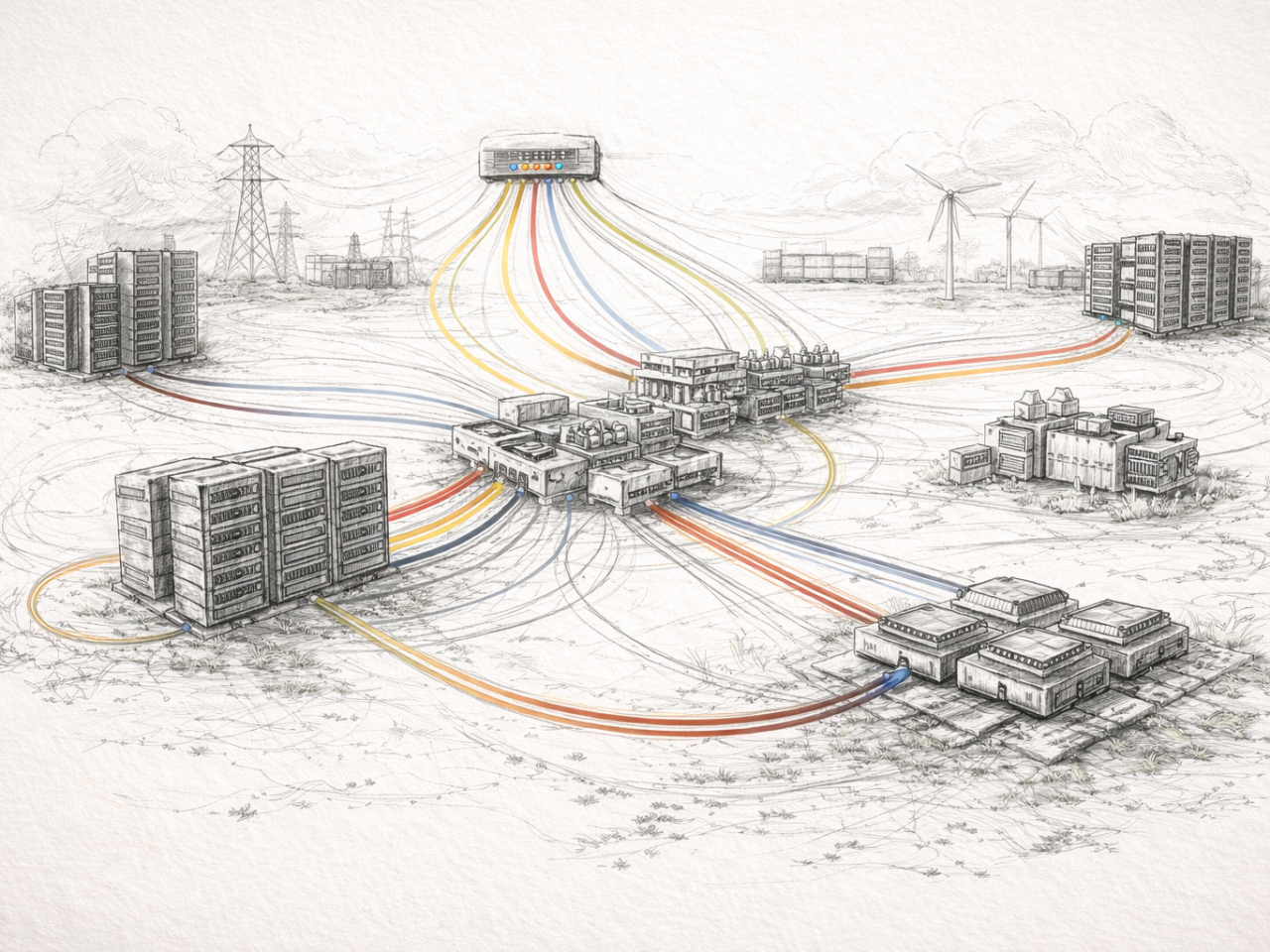
Modern data centers present themselves as the pinnacle of technological progress: dense racks, immense processing power and ever-growing capacity. Yet beneath this appearance of novelty lies a quieter truth. Most data centers today are not truly designed; they are inherited. Their structure reflects decades-old assumptions about how computation should be organised, scaled and cooled.
Read More
Monday, February 9, 2026

Data centers are no longer constrained by technology or demand, but by the physical limits of the energy system around them. As grid capacity and heat become decisive factors, digital infrastructure shifts from an IT optimisation challenge to a question of governance and system design.
Read More
Monday, February 9, 2026

For years, photonics has been presented as a technology of the future — elegant, powerful and perpetually just over the horizon. It appears in research agendas and innovation strategies alongside quantum computing and other long-term breakthroughs. As a result, it is still widely perceived as experimental rather than structural.
Read More
Monday, February 9, 2026

AI is not exhausting our energy systems because it computes too much, but because digital infrastructure still wastes energy on heat, resistance and cooling. Photonics offers a structural way out.
Read More
Sunday, February 8, 2026

When networks become intelligent, they stop being neutral. Decisions once made by institutions move quietly into protocols, standards and optimisation logic. In the era of 6G, the design of infrastructure becomes the invisible constitution of digital society.
Read More
Saturday, February 7, 2026

For years, financial markets have presented themselves as transparent mechanisms. Prices move, analysts explain, quarterly results confirm or disappoint. Risk is assessed, information is absorbed and capital responds. At least, that is the theory.
Read More
Saturday, February 7, 2026

For decades, digital networks have functioned as reactive infrastructures. They transmitted signals, responded to requests and waited for human input. Agency was clear: users acted, systems followed. Efficiency was measured in speed, bandwidth and latency.
Read More
Saturday, February 7, 2026

When networks begin to anticipate rather than merely transmit, infrastructure becomes a question of values, power and intent — not just technology. In that shift, connectivity turns from a technical system into a societal choice.
Read More

 Available here:
