Thursday, January 1, 2026

When the conversation turns to artificial intelligence, innovation and geopolitics in Europe, names like Oxford, Cambridge and ETH Zürich inevitably dominate headlines. Their research centres, such as Oxford’s Future of Humanity Institute, frame debates on AI ethics, strategy and societal impact. Yet, the real laboratories of applied AI and geopolitical foresight often lie elsewhere — in institutions quietly bridging the gap between hard engineering, policy insight and strategic foresight.
Read More
Monday, December 22, 2025

Algorithms rarely draw attention to themselves. They do not speak, persuade or campaign. Yet they increasingly decide how we move through cities, how markets function and how information reaches us. Their influence is subtle, procedural — and deeply political. To understand why algorithms matter today, it helps to start somewhere deceptively simple.
Read More
Sunday, December 21, 2025

Artificial intelligence has quietly become one of the most loaded words in European education. Not because of what it can do, but because of why institutions increasingly want to use it. Across Europe — and notably in the Netherlands — higher education institutions are facing financial pressure. Budget cuts, rising costs and structural reforms are pushing boards to look for efficiency gains. In that context, AI is often framed as an obvious solution. Faster processes. Fewer people. Lower costs. That framing is understandable — and fundamentally flawed.
Read More
Tuesday, December 16, 2025

Higher education shines differently across continents. The US drives entrepreneurial innovation through industry ties and private funding. Europe focuses on collaborative research, societal impact and accessible public systems. Asia, led by China, surges with massive state investment and rapid scaling. Our Top 10 lists (from QS, THE and ARWU 2025) showcase the best in each region. Competition, collaboration, or scale—which path inspires you most? 🇪🇺🇺🇸🇨🇳
Read More
Friday, December 12, 2025

Denmark is one of Europe’s smallest nations, yet its universities play an outsized role in research, innovation and digital transformation. The Danish system is compact, internationally oriented and deeply integrated with industry. It is also undergoing a subtle shift: from being a welfare-state academic ecosystem to becoming a strategic engine for tech, clean energy and life sciences. In many ways, it shows what a mid-sized EU country can achieve with focus instead of scale.
Read More
Tuesday, December 2, 2025

When most people think of Greece, images of the Acropolis, sun-drenched islands and ancient philosophers come to mind. But in labs tucked away across Athens and other cities, a different kind of innovation is quietly taking shape — artificial intelligence. Greek universities are carving out a space for the country in Europe’s fast-evolving AI ecosystem, blending tradition with cutting-edge technology.
Read More
Monday, December 1, 2025

Europe does not lack talent. It lacks the gravitational pull to keep it. Across the continent, universities, labs and startups produce some of the world’s strongest AI researchers. Yet the same people often migrate to the U.S. or the UK, pulled by higher salaries, deeper compute access and faster-moving ecosystems. Europe cultivates brilliance, but struggles to convert it into long-term advantage.
Read More
Saturday, November 29, 2025
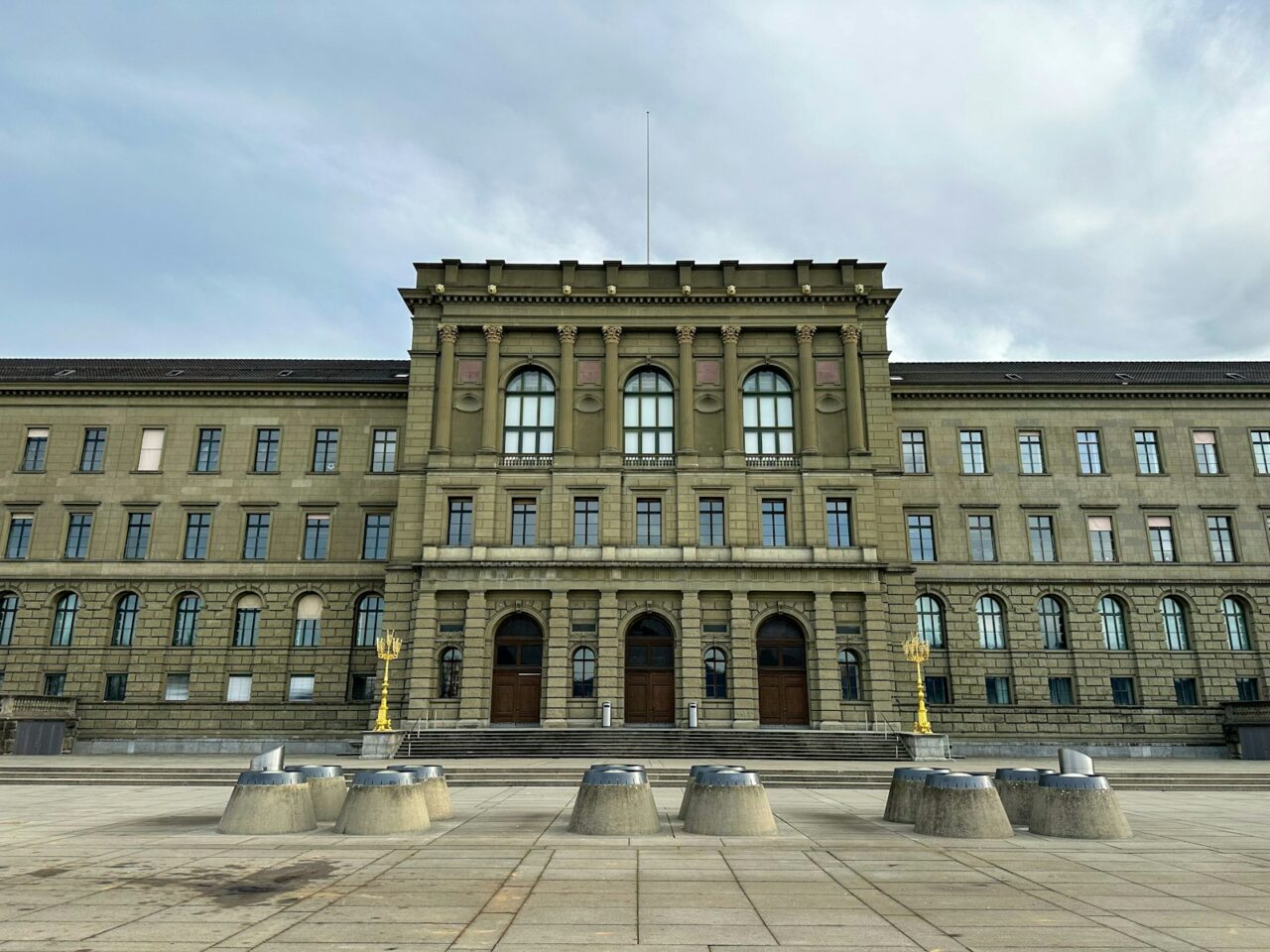
Europe is home to some of the world’s most prestigious AI faculties. Institutions like ETH Zürich, the Technical University of Munich, EPFL, Oxford and Cambridge consistently produce research that ranks among the very best globally. Their professors are leaders in fields such as robotics, neuro-symbolic AI and trustworthy AI, attracting top PhD students and forming vibrant hubs of expertise. With such talent and intellectual firepower, Europe should, on paper, be a major force in the AI landscape.
Read More
Saturday, November 29, 2025

Southern Europe was long perceived as a follower in the race for AI and advanced computing. That perception is rapidly changing. Italy and Spain are not just catching up — they are accelerating, building a distinctive innovation corridor that combines strategic infrastructure, research depth and industrial pragmatism.
Read More
Friday, November 28, 2025

Europe’s economic strength has always depended on its people. Yet in a world where AI, deep tech and advanced manufacturing are reshaping labour markets at high speed, talent has become a strategic resource — as critical as energy or raw materials. The nations that thrive will be those that treat talent development not as an educational outcome, but as a national mission.
Read More

 Available here:
