Europe Loves Culture. But Who Gets to Take Part?
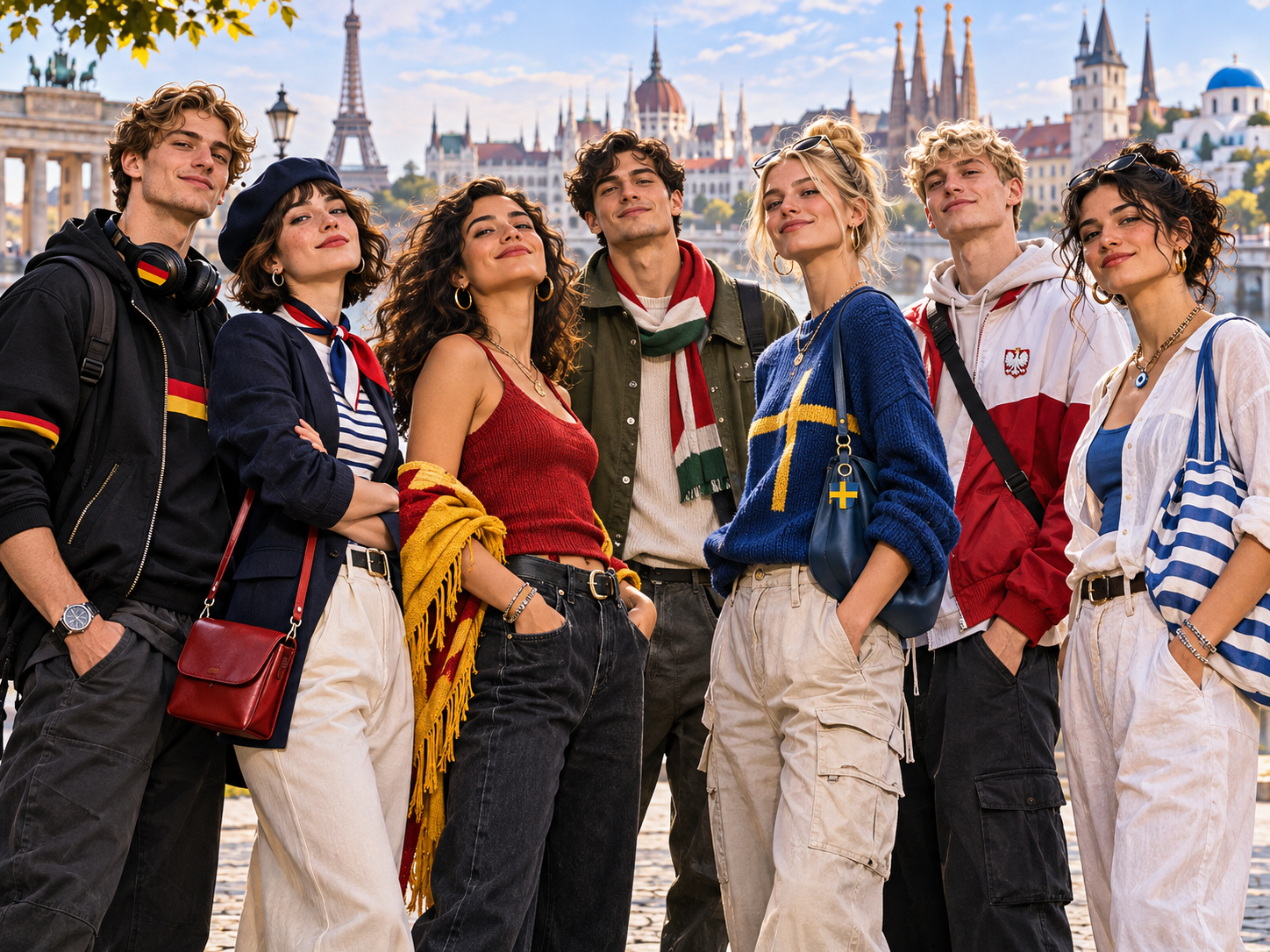
New European research reveals the tensions between cultural participation, artistic freedom and equal access
Europeans value art, heritage and creative expression. Yet new research reveals a growing tension between cultural ambition, economic security and equal access. Behind Europe’s extraordinary cultural diversity lies a fundamental question: who has the opportunity to enjoy, create and shape its cultural life?
Europeans attach remarkable importance to culture. They see it as a source of belonging, freedom and shared experience, while almost half say they engage in artistic activities themselves. Yet opportunities to attend performances, earn a living through creative work or create without pressure remain uneven.
Recent findings from Eurobarometer, Eurostat and Culture Action Europe’s State of Culture 2026 report offer different perspectives on this reality. Together, they reveal five questions about the cultural life Europeans value, the barriers they encounter and the conditions needed to sustain it.
🟦 Is Europe experiencing a cultural revival?
The European Union is often described through its economic ambitions, institutional structures and political disagreements. Yet beneath those debates lies an extraordinary cultural landscape, shaped by centuries of artistic exchange and millions of people practising music, literature, theatre, visual arts and other creative activities.
Recent research suggests that cultural engagement remains an important part of European life.
According to the European Commission’s Special Eurobarometer on Europeans’ Attitudes Towards Culture, published in May 2025, 49% of respondents had participated in artistic activities during the previous year. That compares with 37% in 2013.
These figures concern active artistic participation, including singing, dancing, playing an instrument or making art. They suggest that cultural life extends far beyond professional institutions and paying audiences.
Culture is also a substantial source of employment. Eurostat reported in July 2026 that approximately 8.9 million people worked in cultural employment across the EU in 2025, representing 4.3% of total employment.
Yet the picture is not uniformly positive.
Eurostat’s latest detailed statistics on attendance at cinemas, performances and cultural sites, collected in 2022, showed lower participation than in 2015 across most countries. Those figures require considerable caution, however: they covered the preceding twelve months, when COVID-19 restrictions still affected cultural activities.
It would therefore be misleading to describe Europe as experiencing either a straightforward cultural revival or a general cultural decline. The evidence instead points to a continuing public appetite for cultural expression, alongside considerable differences in how that appetite translates into participation.
The tension: Europeans value culture and increasingly describe themselves as active creators, but enthusiasm alone cannot establish whether cultural opportunities are becoming more accessible or sustainable.
🟦 Why does access to culture still depend so heavily on income?
Europe’s cultural heritage belongs, in principle, to everyone. In practice, the opportunity to experience it is far from equally distributed.
Eurostat’s cultural participation analysis, updated in 2026 using data collected in 2022, reveals substantial differences between income groups.
In 17 EU Member States, people in the highest income quintile were at least twice as likely to participate in cultural activities as those in the lowest.
The contrast is particularly striking in Bulgaria, where the participation rate among the highest-income group was 6.5 times that of the lowest-income group. Denmark presents a different picture: 69.4% of people in its lowest income quintile reported participating in at least one of the cultural activities measured.
Geography matters too.
In 23 EU countries, participation was higher among city residents than among people living in smaller towns or rural communities. Eurostat also found lower participation among people with disabilities than in the general population across the EU countries studied.
These differences cannot simply be attributed to ticket prices. The research identifies relationships between participation and social characteristics, rather than establishing one universal cause. Distance, transport, accessibility, available facilities, educational opportunities and familiarity with cultural institutions may all influence who participates.
There is also a question about how culture itself is understood.
A visit to a national museum, an evening at the opera and a ticket to a major theatre production are familiar measures of cultural participation. But Europe’s cultural life also includes community choirs, local festivals, amateur theatre, traditional crafts and informal creative gatherings.
A cultural policy focused primarily on institutions risks overlooking some of the places where cultural participation actually begins. These everyday forms of creativity may be particularly important in communities where major cultural venues are less accessible.
The statistical differences nevertheless point to a wider issue: cultural opportunity is not distributed evenly across European society. The question is not merely whether people appreciate culture, but whether they have meaningful opportunities to participate in it.
The tension: Culture is widely celebrated as a shared public good, yet the ability to experience it remains closely associated with economic circumstances, geography and accessibility.
🟦 Can European culture thrive if artists struggle to earn a living?
The economic position of cultural professionals adds another dimension to the debate.
Europeans appreciate artists, but they are less certain that artistic work is fairly rewarded.
The 2025 Eurobarometer found that only 51% of respondents believed artists in their country generally received fair and appropriate remuneration. This measures public perception rather than artists’ actual earnings, but it nevertheless reveals uncertainty about the economic conditions behind Europe’s creative life.
A more detailed perspective emerged on 21 October 2026, when Culture Action Europe published the second edition of its State of Culture report.
Based on interviews with 27 representatives of 19 cultural networks, policy research covering 14 EU countries and a survey of 483 respondents, the report describes a sector seeking greater independence and influence over the conditions in which cultural work takes place.
One recurring concern is the reliance on short-term, project-based financing.
Such funding can encourage experimentation, support new organisations and direct public resources towards specific priorities. But it can also create uncertainty for institutions and individuals whose work depends on continuity, long-term relationships and time to develop ideas.
The consequences extend beyond administrative inconvenience. Artistic production involves research, rehearsal, experimentation and, frequently, failure. A financing model built predominantly around predetermined outputs may reward projects that can promise measurable results while making more exploratory work difficult to sustain.
Technological change introduces another pressure.
In the Eurobarometer, 73% of Europeans expressed concern that generative artificial intelligence could affect artists’ employment or earnings. These concerns do not establish what the eventual economic impact of AI will be, but they underline how strongly questions of authorship, compensation and professional security have entered the cultural debate.
The challenge is not necessarily a choice between public subsidies and commercial independence. Europe’s cultural ecosystem depends on public institutions, private enterprises, philanthropy, audiences and independent creators.
Each has a different role, and each brings different expectations about financial returns, artistic quality, accessibility and social value.
The more fundamental question is whether these models can collectively provide sufficient stability while preserving the freedom that makes creative work valuable.
The tension: Europe recognises the social and economic value of creativity, but the systems supporting cultural production do not always provide the continuity and independence that creative work requires.
🟦 Is Europe protecting artistic freedom, or merely celebrating it?
Freedom of artistic expression occupies a prominent place in Europe’s democratic identity.
In the 2025 Eurobarometer, 88% of respondents said artistic freedom was important to them. At the same time, 77% believed artists in their country could express their ideas and opinions without fear of government censorship or retaliation.
These figures measure two different things: the value people attach to artistic freedom and their perception of how securely that freedom is protected.
But artistic freedom involves more than the formal absence of censorship.
The State of Culture 2026 report argues that creative independence can also be constrained by financial insecurity, concentrated ownership, platform influence, social pressure and self-censorship.
A theatre dependent on annual funding decisions, an independent publisher facing intense commercial pressures or an artist concerned about public controversy may encounter constraints without receiving an explicit prohibition. In such circumstances, the boundaries of artistic expression can be influenced by the conditions under which creative work is produced.
That does not mean every funding condition or institutional requirement represents a threat to artistic freedom. Public money requires accountability, while cultural organisations have legitimate responsibilities towards audiences, employees and communities.
The difficulty arises when mechanisms designed to support culture also narrow the range of work that institutions and creators feel able to undertake. An important distinction therefore emerges between legal freedom and practical independence.
A society may formally protect artistic expression while leaving some artists without the resources, institutional support or professional security needed to exercise that freedom.
This question becomes increasingly relevant as cultural institutions navigate political disagreement and competing expectations about representation, identity and public responsibility.
Art can bring people together, but it can also challenge assumptions, question authority and provoke disagreement. These functions are not necessarily contradictory. The ability to accommodate disagreement may itself be part of culture’s contribution to an open society.
The tension: Artistic freedom is widely supported as a principle, but its practical exercise depends on economic conditions, institutional independence and tolerance for creative disagreement.
🟦 Can culture bring Europeans closer together without diminishing their differences?
Perhaps the most encouraging finding in the European research concerns the relationship between culture and belonging.
In the 2025 Eurobarometer, 87% of respondents agreed that culture and cultural exchange should have a very important place in the European Union, helping citizens from different countries feel more European. A further 86% considered cultural heritage important for Europe.
These figures point towards an understanding of European identity that extends beyond political institutions and economic integration.
Europe’s cultural character has never been defined by a single language, tradition or artistic movement. Its development has involved exchange between regions, migration, changing borders, religious and philosophical traditions, and the constant reinterpretation of inherited ideas.
That diversity is an important part of its appeal.
Yet the relationship between culture and collective identity is not without tension. When culture is presented primarily as a shared heritage to preserve, there is a risk of overlooking its capacity to evolve. When it is treated mainly as an instrument for social cohesion or economic development, the independent value of artistic expression may receive less attention.
These questions are also beginning to influence European cultural policy.
The European Commission’s Culture Compass for Europe, adopted in November 2025, acknowledges the need to strengthen cultural participation, improve conditions for artists and support cultural diversity. Its proposed EU Artists Charter is one response to the concerns surrounding professional security.
But cultural life cannot be shaped by European institutions alone.
Much of it develops in local theatres, libraries, community centres, festivals, studios and public spaces. National and local authorities, cultural organisations, independent creators and audiences all influence whether these environments remain accessible and vibrant.
European cooperation can help create opportunities across borders, but the cultural connections that give Europe meaning are often formed through much smaller encounters: a performance in another language, an exhibition that challenges familiar assumptions, or a local festival introducing communities to traditions they did not previously know.
The broader question is therefore not whether Europe possesses a sufficiently rich cultural identity. Its diversity is already one of its defining characteristics.
The question is whether European societies can create the conditions in which that diversity remains accessible, independent and capable of renewal.
The tension: Culture offers Europeans a powerful source of connection, but its ability to unite depends partly on protecting the differences, independence and openness that give it meaning.
The Altair Perspective | Europe’s Cultural Test
The findings do not describe a continent that has lost its appreciation for culture. They describe a continent in which cultural participation, professional security and artistic independence remain uneven, despite widespread public recognition of their importance.
Europe’s challenge is therefore not simply to celebrate its cultural heritage or expand the economic contribution of its creative industries. It is to ensure that cultural life remains open to people with different incomes, backgrounds, abilities and experiences.
A continent’s cultural strength cannot be measured solely by the number of museums it preserves, the festivals it hosts or the artists it celebrates.
It also depends on who can enter those spaces, who can afford to create, and whether the next generation has the freedom to imagine something different.
Europe’s cultural future will be shaped not only by what it chooses to preserve, but by whom it enables to participate.
Research and sources
This analysis draws on four principal sources:
- Culture Action Europe — State of Culture Report, Second Edition, published 21 October 2026.
- European Commission — Special Eurobarometer on Europeans’ Attitudes Towards Culture, published 8 May 2025.
- Eurostat — Culture Statistics: Cultural Participation, based primarily on 2022 participation data, extracted in March 2026.
- European Commission — Culture Compass for Europe, adopted November 2025.
Additional employment figures come from Eurostat’s July 2026 publication on cultural employment in 2025.
Methodological note: The Eurobarometer measures public attitudes and self-reported artistic participation. Eurostat’s 2022 cultural attendance data cover an earlier period affected by COVID-19 restrictions. Culture Action Europe’s research reflects the perspectives of cultural professionals and sector organisations and should not be interpreted as a representative survey of all Europeans. These sources provide complementary perspectives rather than directly comparable measurements.
Credit
AI-generated illustration | Altair Media
Caption
Seven young Europeans, seven cultural identities, one shared future. From Germany and France to Spain, Hungary, Sweden, Poland and Greece, a new generation embodies the diversity, confidence and creative potential of Europe.
