Airbus: Can Europe Turn Defence Ambition into Industrial Capacity?
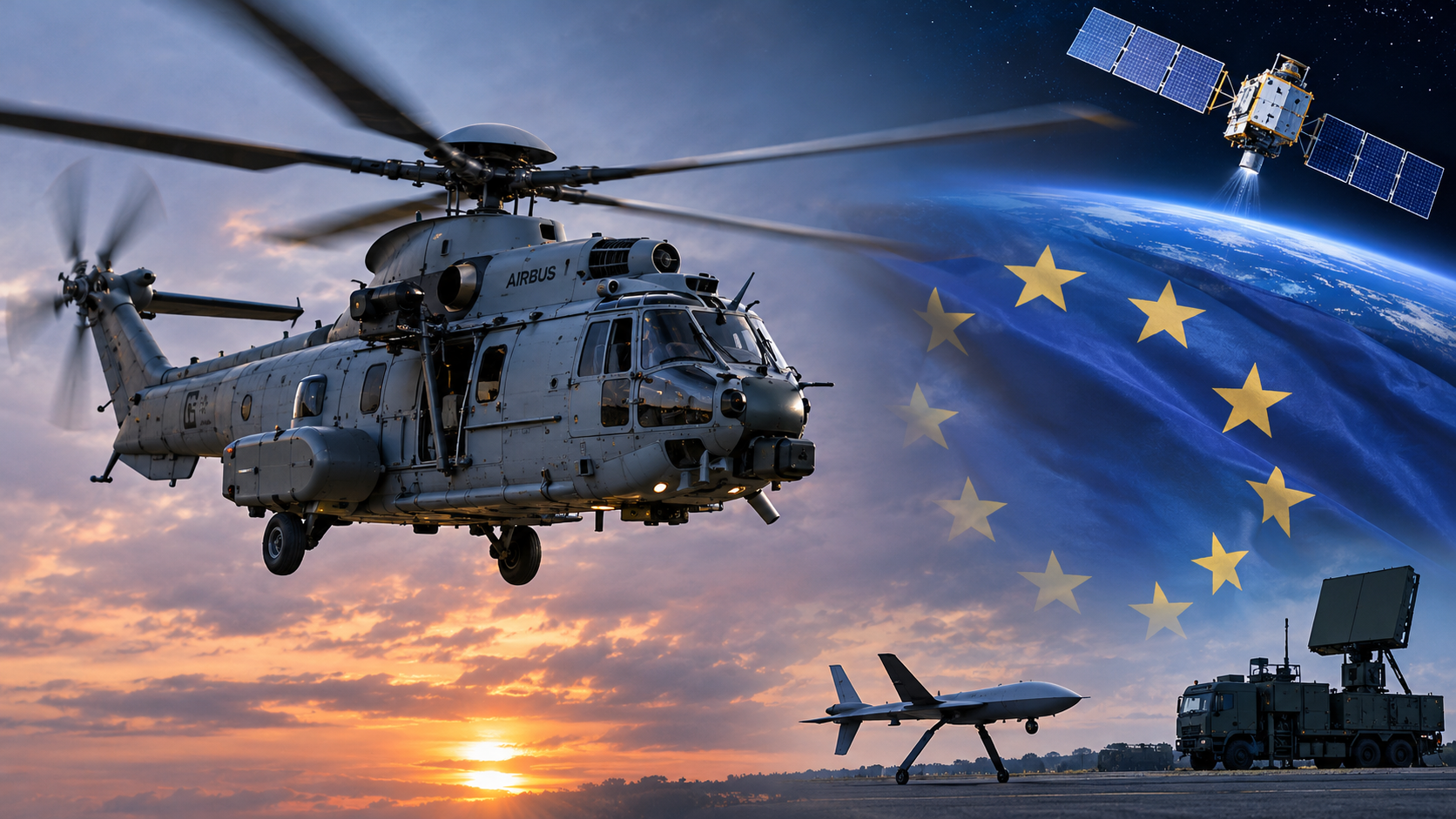
Rising defence orders put Europe’s industrial capabilities to the test.
Airbus will showcase its defence technologies at NEDS 2026 in Rotterdam on 19 November, presenting military helicopters, autonomous systems, satellite communications and cybersecurity solutions. The exhibition follows strong commercial momentum: Airbus Defence and Space secured €11.5 billion in new orders during the first nine months of 2026, a 70% increase year-on-year.
The orders are growing. Whether Europe’s defence industry can deliver, integrate and scale these capabilities is a different question.
🔹 Can Airbus Deliver What Europe Is Ordering?
Airbus Defence and Space reported revenue growth of 5% in the first nine months of 2026, against a 70% increase in order intake. These figures reflect different stages of business, but growing demand puts delivery capacity in focus. The Netherlands offers a concrete example: its twelve H225M Caracal helicopters are scheduled for delivery between 2030 and 2032. The original requirement was fourteen, but higher-than-expected mission equipment costs contributed to a smaller order.
🔹 Can European Defence Systems Actually Work Together?
At NEDS, Airbus will highlight technologies such as MARS Autonomy, designed to support collaborative missions involving crewed and uncrewed systems. Yet European armed forces still rely on different national equipment and procurement programmes. Technical integration can connect platforms, but common standards, coordinated investment and compatible command structures require cooperation between governments as well as manufacturers.
🔹 Will Smaller European Companies Benefit?
Airbus relies on specialised suppliers, research institutions and technology companies. Innovations in drones, software and cybersecurity frequently involve smaller businesses, while major procurement contracts typically go to established defence manufacturers. Certification requirements, lengthy procurement procedures and development costs can restrict access. The challenge is to ensure that growing defence investment also creates opportunities beyond Europe’s largest industrial groups.
🔹 Does European Production Mean European Independence?
Airbus positions its defence portfolio as a contribution to European sovereignty. Yet European manufacturing does not guarantee control over critical components, semiconductors or software. International supply chains support innovation and production, but can also create dependencies. Strategic independence depends partly on whether European countries can maintain, adapt and operate essential systems when access to foreign technologies becomes restricted.
Europe is committing more money to defence. The industrial test is whether Airbus and its partners can translate that demand into reliable deliveries, wider industrial participation and capabilities that European countries can operate together.
Image Credit
AI-generated illustration | Altair Media Europe
Image Caption
Airbus and Europe’s defence ambitions: military aviation, autonomous systems and satellite communications illustrate the challenge of turning growing defence investment into operational capabilities and industrial cooperation.
