Tuesday, February 17, 2026

Brainport’s technological frontier is accelerating, but education systems remain calibrated for a slower era. The Velocity Gap explores how policy, curriculum and talent pipelines struggle to match exponential innovation — and why Europe’s competitiveness ultimately depends on aligning classroom and cleanroom.
Read More
Friday, February 13, 2026

For much of the past half-century, innovation followed a recognisable pattern. New technologies emerged at the margins, matured through research and industry, and were eventually absorbed into stable infrastructures. Strategy assumed continuity. Institutions assumed predictability. Progress, however fast, remained legible.
Read More
Thursday, February 5, 2026

As AI-driven data centres scale at unprecedented speed, France’s centralised nuclear system faces a new kind of pressure. Built for stability, not acceleration, the grid must now absorb volatile demand while digital sovereignty increasingly depends on physical energy control.
Read More
Thursday, February 5, 2026

France built its power on nuclear electricity. Today, that system is under strain. As AI, data centres and digital sovereignty reshape demand, France’s centralised energy model faces a defining stress test for Europe’s digital future.
Read More
Tuesday, February 3, 2026

The MedTech landscape in 2026 is defined not just by innovation, but by how technology earns trust. As AI, robotics and data-driven care accelerate, the real differentiator is no longer what technology can do — but how human it feels. The Big Five—Philips, GE HealthCare, Medtronic, J&J MedTech and Siemens Healthineers—each navigate this tension differently.
Read More
Friday, January 16, 2026

While much of the public conversation around 6G still revolves around spectrum, speed and new antennas, a far more consequential shift is happening quietly beneath the surface. The real battle is no longer in the air interface, but inside the chip. And in that domain, one company plays a far more decisive role than is often acknowledged: Qualcomm.
Read More
Thursday, January 15, 2026

British Telecom sits at a fascinating — and risky — crossroads. While Deutsche Telekom has chosen to dominate the AI software stack with AI-Phones and proprietary clouds, BT has embraced a radically different path: industrial acceleration and the careful demolition of the past.
Read More
Thursday, January 8, 2026

For years, the evolution of mobile networks followed a familiar logic: faster radios, denser cells, smarter cores. Each generation promised better performance, greater efficiency and new services. Artificial intelligence, at first glance, appears to be the next step in that same lineage — another tool to optimise an already complex system.
Read More
Wednesday, January 7, 2026
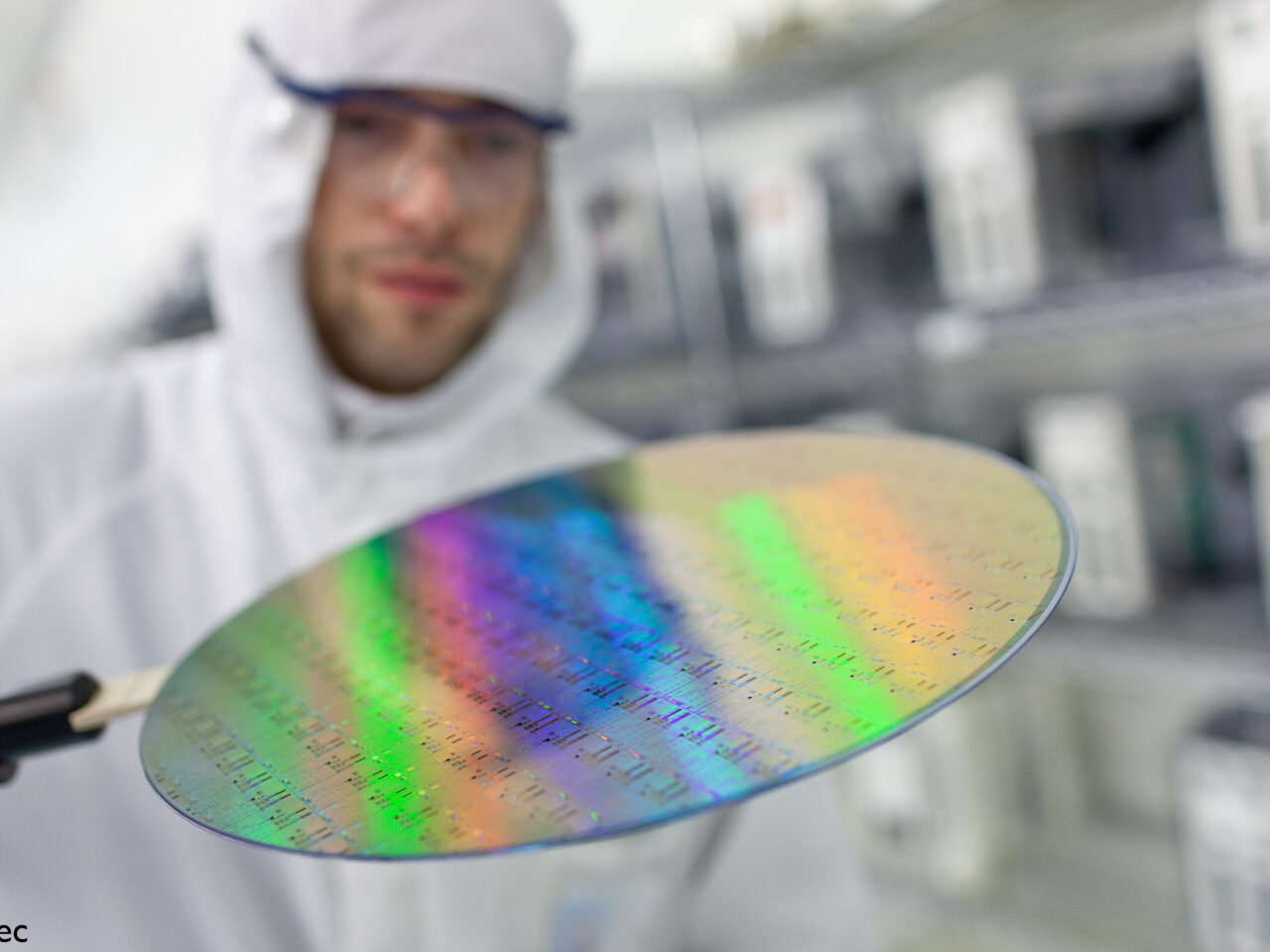
In global discussions about semiconductors, the focus tends to drift toward factories, supply chains and geopolitical leverage. Attention goes to where chips are manufactured, who controls production capacity and how nations secure access to critical technologies. Yet these debates often overlook a more fundamental question: where do future chip technologies actually originate?
Read More
Saturday, December 20, 2025

When the European Union began drafting the AI Act, Spain was already ahead of the curve. Today, it is not an exaggeration to say that Spain is one of the founding architects of Europe’s AI regulation. While other countries are still debating the balance between innovation and safety, Spain has taken concrete steps: establishing a national AI agency, investing in world-class infrastructure and even building AI systems that reflect its own languages and culture. In a continent searching for technological sovereignty, Spain is quietly becoming a model for how to do it right.
Read More
